



What's Happening?
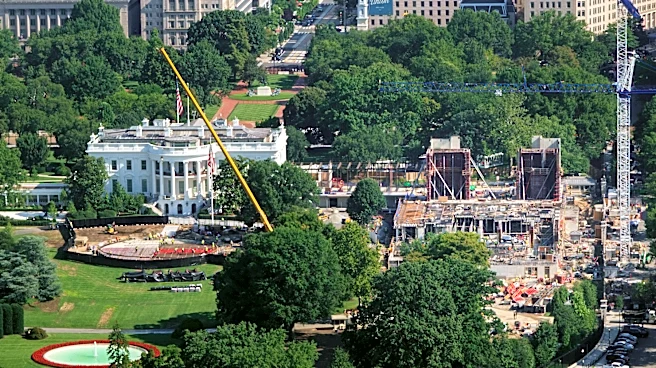
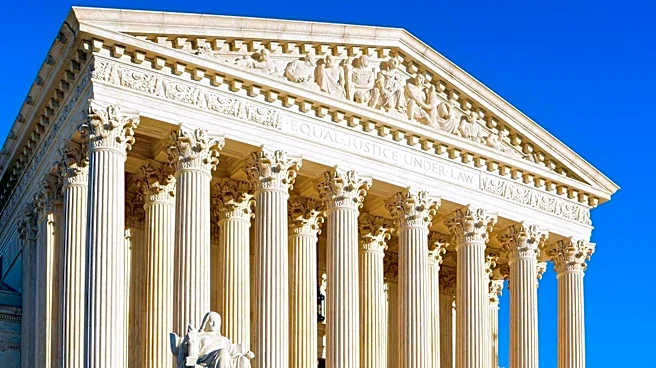
President Trump's administration has petitioned the U.S. Supreme Court to allow the continuation of construction on a $400 million ballroom project at the White House. This request comes after a three-judge panel from the U.S. Court of Appeals for the District
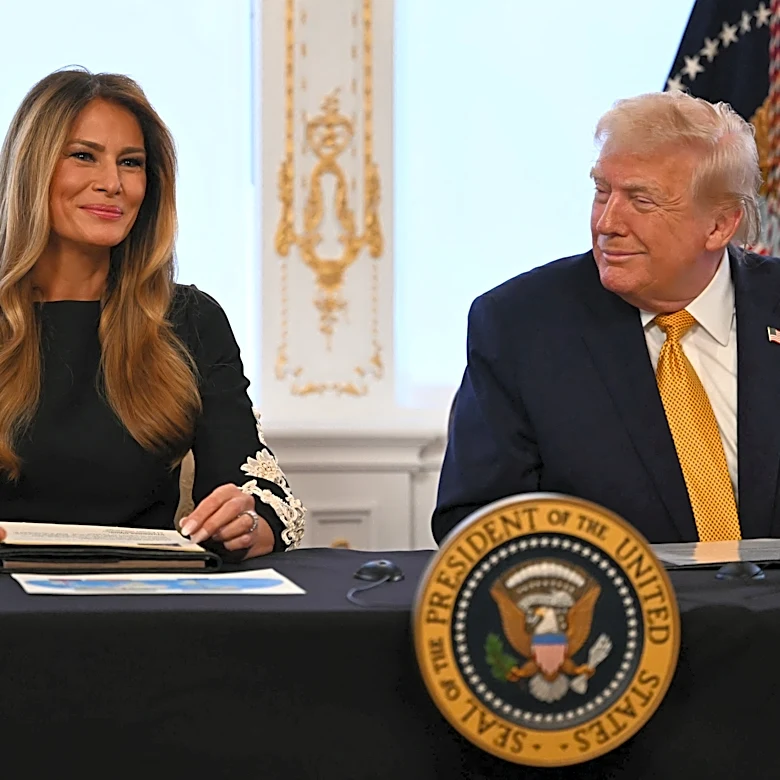
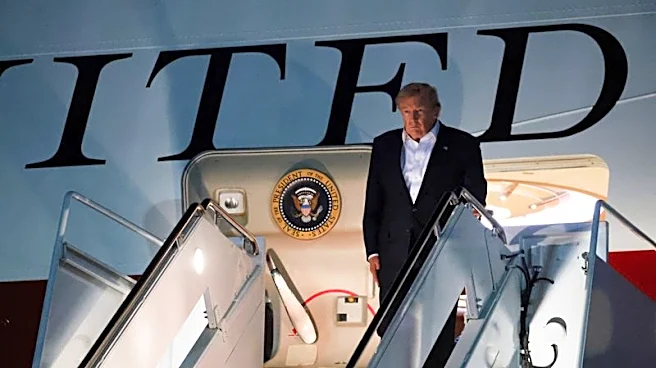
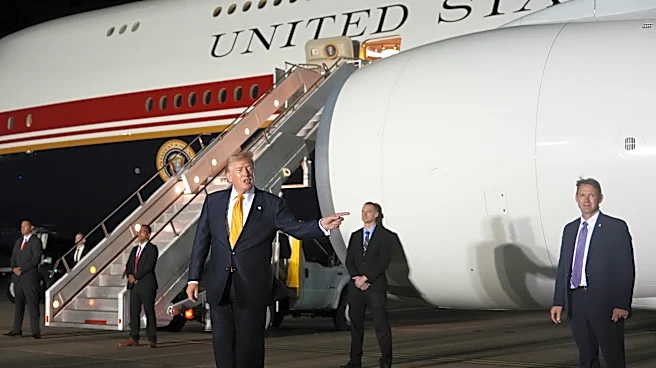
of Columbia Circuit ordered a halt to the work, ruling that Congress had not approved the project. The appeals court's majority concluded that President Trump lacked the unilateral authority to build the 90,000-square-foot ballroom, which involved the demolition of the White House's East Wing. The administration argues the project is crucial for national security, citing a recent threatened missile attack on Air Force One. The Solicitor General, D. John Sauer, emphasized the project's importance as an 'integrated military complex' and a 'totally secure ballroom space.' The lower court had suspended its ruling for two weeks to allow for this appeal to the Supreme Court.
Why It's Important?
This case raises fundamental questions about the separation of powers and the extent of presidential authority over federal property and construction projects. The dispute pits the executive branch's claims of national security and inherent presidential power against congressional oversight and judicial review. A Supreme Court decision in favor of the administration could set a significant precedent, potentially expanding executive power in undertaking large-scale projects without explicit legislative approval. Conversely, upholding the lower court's injunction would reinforce the checks and balances system, affirming Congress's role in authorizing federal expenditures and projects. The financial aspect is also contentious, with the administration claiming the project is funded by $400 million in private donations, while Democrats in Congress suggest taxpayer funds from President Trump's tax cuts bill are being used, and that additional congressional funding has been requested but not approved.
What's Next?
Chief Justice John Roberts has set a deadline for the plaintiffs, historic preservationists who sued to stop the construction, to respond to the administration's petition by Tuesday. The Supreme Court will then decide whether to grant the stay, which would permit construction to resume while the appeal process continues. The appeals court's order to halt aboveground construction is set to take effect on August 21 if the Supreme Court does not intervene. This legal battle is expected to continue, potentially leading to a landmark ruling on the scope of presidential power concerning federal infrastructure and national security claims. The administration's argument that the project is 'on time and under budget' and 65% finished adds urgency to their request, as they contend the injunction 'promises chaos in service of nothing.'
Beyond the Headlines
The legal challenge to the White House ballroom construction delves into the broader implications of executive authority and the role of the judiciary in mediating disputes between branches of government. The administration's argument that the president has 'unimpeded authority to renovate the White House' and that such matters should be left to the 'political process, not construction-by-injunction,' reflects a push for greater executive autonomy. This case could influence how future administrations approach federal construction and renovation projects, particularly those framed under national security pretexts. It also highlights the ongoing tension between modernizing government facilities and preserving historical integrity, with historic preservationists playing a crucial role in challenging executive actions. The outcome will contribute to the evolving understanding of checks and balances within the U.S. governmental structure.