
What's Happening?
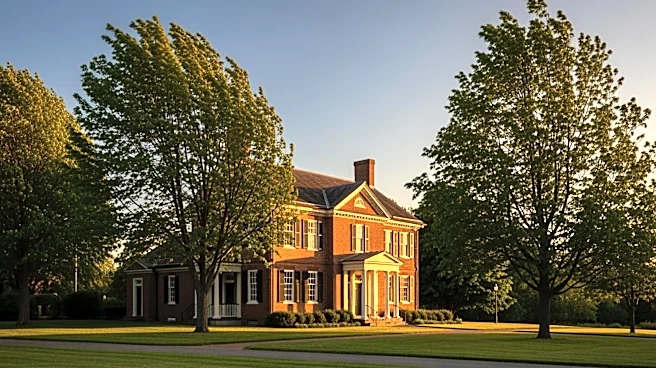
President Lincoln's Cottage, a 34-room Gothic Revival estate in Washington, DC, serves as a historical site where visitors can explore the environment in which President Abraham Lincoln drafted the Emancipation
Proclamation. The cottage, located on a 250-acre campus, was designated a national monument in 2000 and opened to the public in 2008. It offers a unique experience by allowing visitors to interact with the space, such as sitting on 19th-century chairs and using the original wooden banister. The site also hosts the Students Opposing Slavery program, which educates youth on Lincoln's legacy and contemporary slavery issues. Despite its historical significance, the cottage remains an under-the-radar tourist destination, primarily attracting visitors through word of mouth.
Why It's Important?
The cottage provides a tangible connection to President Lincoln's life and the pivotal moments of his presidency, such as the drafting of the Emancipation Proclamation. It serves as a platform for education and reflection on both historical and current social issues, emphasizing the ongoing relevance of Lincoln's legacy. The site encourages visitors to engage in thoughtful discussions about the nation's history and future, fostering a deeper understanding of the challenges and progress in the pursuit of a more perfect union. By preserving and promoting this historical site, the cottage plays a crucial role in educating the public and inspiring civic engagement.
What's Next?
The cottage continues to focus on expanding its educational programs and increasing visitor engagement. Efforts to raise awareness about the site and its offerings are likely to continue, aiming to attract a broader audience. The ongoing challenge is to maintain the site's historical integrity while adapting to modern educational needs. Future initiatives may include enhanced digital outreach and partnerships with educational institutions to further integrate the cottage's resources into broader educational curricula.
Beyond the Headlines
The preservation of Lincoln's Cottage highlights the importance of historical sites in understanding national identity and values. It underscores the need for spaces that facilitate dialogue and reflection on complex historical narratives. The site's focus on contemporary issues of slavery through its educational programs also points to the enduring impact of historical legacies on current social justice movements. By bridging past and present, the cottage serves as a reminder of the continuous effort required to address societal challenges and promote equality.