



What's Happening?
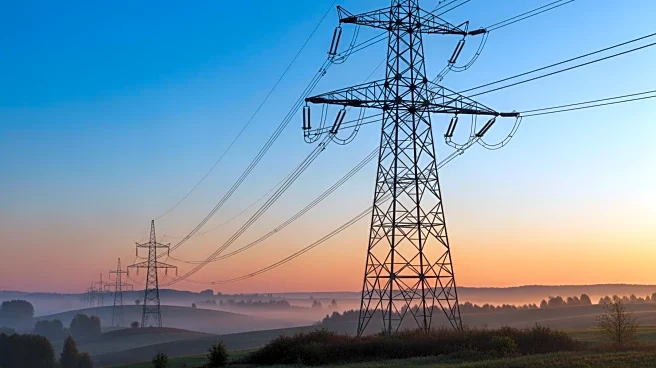
The PJM Interconnection's board is under scrutiny as the Pennsylvania ratepayer advocate has urged the rejection of a proposal by NextEra Energy and Exelon to construct a $1.7 billion transmission line across central Pennsylvania. This project is part
of PJM's $11.6 billion regional transmission expansion plan aimed at ensuring grid reliability by 2030. The plan is based on significant demand growth forecasts from data centers, which have recently been revised downward. The Office of Consumer Advocate (OCA) argues that in-state generation buildouts or faster alternatives could address the issues more cost-effectively, benefiting Pennsylvania ratepayers. The OCA's concerns highlight the potential for increased electricity costs due to data center demands, which have already led to a 49% rise in wholesale power costs in PJM's region in 2025.
Why It's Important?
The proposed transmission line and the broader expansion plan have significant implications for electricity costs and infrastructure development in the PJM region, which spans 13 Mid-Atlantic and Midwest states. The rising costs associated with data center demands could lead to higher electricity bills for consumers, as seen with the recent spike in wholesale power prices. The debate over the transmission line also underscores the challenges of balancing infrastructure expansion with cost-effectiveness and reliability. The outcome of this proposal could set a precedent for how future energy infrastructure projects are evaluated and funded, impacting stakeholders including utility companies, consumers, and regulatory bodies.
What's Next?
The PJM board's decision on the transmission line proposal will be closely watched, as it could influence future infrastructure projects and energy policy in the region. If the proposal is rejected, alternative solutions such as in-state generation or other innovative approaches may be explored. Additionally, the ongoing discussions about data center demands and their impact on electricity costs could lead to further regulatory scrutiny and adjustments in planning processes. Stakeholders, including state governments and consumer advocates, are likely to continue advocating for cost-effective and reliable energy solutions.