



What's Happening?
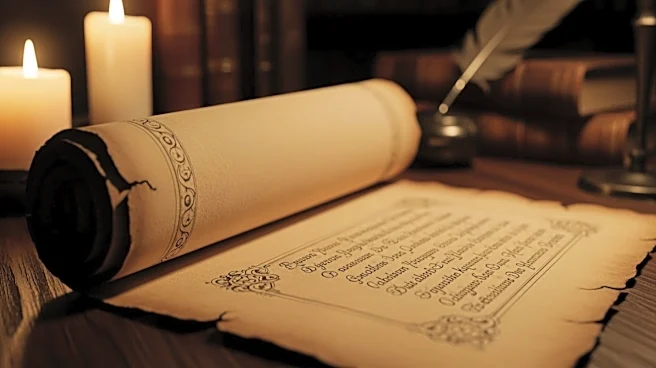
Researchers from Trinity College Dublin have discovered the oldest surviving English poem within a medieval manuscript located in Rome's main public library. The poem, known as 'Caedmon's Hymn,' dates back to the 9th century, predating the earliest known copy
by three centuries. This discovery highlights the early significance of the English language. The manuscript, which has a complex history, was originally composed by Caedmon, a Northumbrian agricultural worker, in the 7th century. It was found within the main body of Latin text, marking a significant find for medieval literature scholars.
Why It's Important?
The discovery of 'Caedmon's Hymn' in its original form provides new insights into the diffusion and importance of the English language during the early medieval period. This finding challenges previous assumptions about the timeline of English literary history, suggesting that English was valued much earlier than previously thought. It also underscores the role of international cooperation in uncovering historical texts, as the manuscript had crossed the Atlantic multiple times and changed hands before being found in Rome. This could lead to further discoveries in other fields through similar collaborative efforts.
What's Next?
The manuscript's discovery may prompt further research into other medieval texts that could be hidden in libraries around the world. The digitization of rare books and manuscripts by Rome's library is part of a broader initiative to make such resources accessible to researchers globally. This could pave the way for additional discoveries, enhancing our understanding of medieval literature and history. Scholars may continue to explore the manuscript's provenance and its journey across continents, potentially uncovering more about its historical significance.
Beyond the Headlines
The discovery of 'Caedmon's Hymn' raises questions about the preservation and transmission of literary works across centuries. It highlights the importance of libraries and archives in safeguarding cultural heritage. The manuscript's journey reflects the complex history of book collecting and the role of collectors in preserving historical texts. This event also emphasizes the need for continued efforts in digitizing and cataloging ancient manuscripts to ensure their accessibility and study by future generations.