



What's Happening?
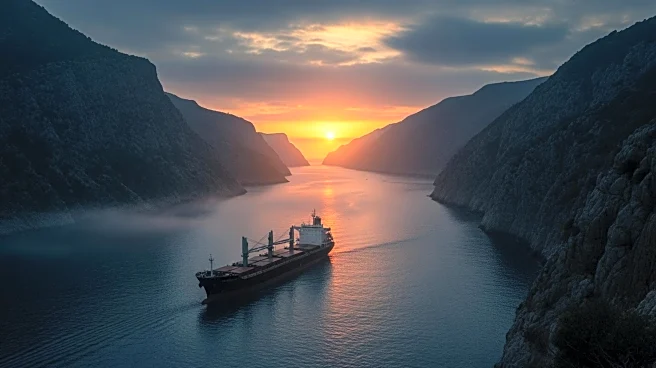
Kuwait has issued a stark warning about the global economic repercussions following Iran's closure of the Strait of Hormuz. Sheikh Nawaf Al-Sabah, CEO of Kuwait Petroleum Corporation, described the situation as an economic blockade affecting Gulf Arab
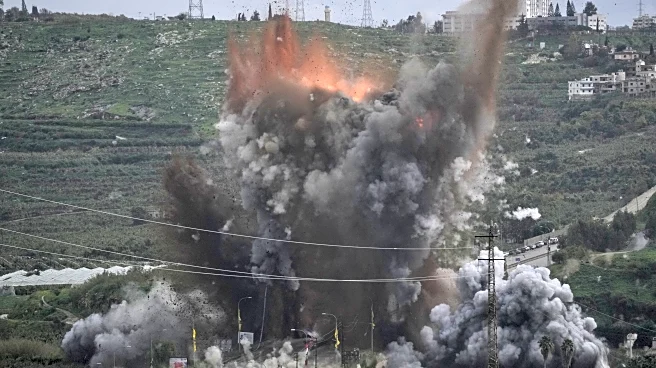
oil producers. The closure has led Kuwait to declare force majeure on its oil delivery contracts, significantly reducing its oil production. The Strait of Hormuz is a critical chokepoint through which about 20% of the world's oil supply passes. The ongoing conflict, marked by Iran's missile and drone attacks, has severely disrupted tanker and cargo traffic, exacerbating the global energy crisis.
Why It's Important?
The closure of the Strait of Hormuz has far-reaching implications for the global economy, particularly in the energy sector. As a major transit route for oil, its disruption threatens to destabilize global oil markets, leading to potential spikes in energy prices. This situation could trigger a domino effect, impacting industries reliant on oil and petrochemicals, and potentially leading to shortages in food packaging and fertilizers. The conflict underscores the vulnerability of global supply chains to geopolitical tensions, highlighting the need for diversified energy sources and routes.
What's Next?
The international community, including the U.S., may need to engage in diplomatic efforts to de-escalate tensions and ensure the reopening of the Strait. Meanwhile, countries may look to increase their strategic oil reserves to mitigate supply disruptions. The situation could also prompt a reevaluation of energy policies, with a potential shift towards renewable energy sources to reduce dependency on oil from geopolitically sensitive regions.