





What's Happening?
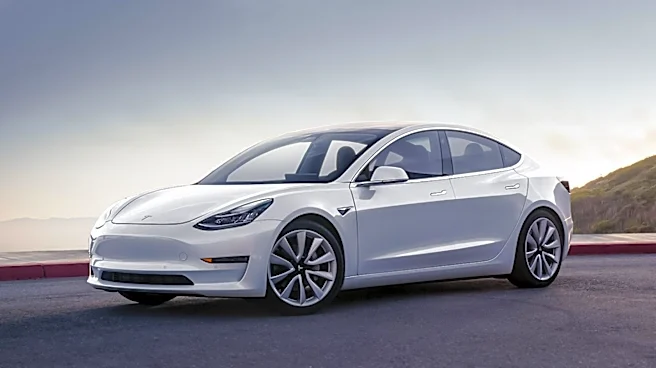
A U.S. man, known on YouTube as 'Mostly Offgrid,' has installed an Ecoflow Heatguard Solar Film kit on the roof of his Tesla Model 3 and shared his one-month review. The installation, which cost approximately $450 for two panels, aims to reduce his dependency
on the energy grid. After a month of driving, including speeds over 80 mph, the film has remained securely in place, attached with 3M VHB tape. The YouTuber reported no noticeable wind noise or loss in vehicle efficiency. While the solar film does obscure the panoramic view from the sunroof, he considers this a minor trade-off, especially given the hot climate he lives in, as it helps keep the interior cooler. On a less sunny day, he observed the panels pulling 138 watts of power, estimating around 250 watts on sunny days, and expressed strong satisfaction with the investment.
Why It's Important?
This personal initiative highlights a growing trend among electric vehicle owners to further enhance their vehicles' energy independence and sustainability. The successful application of solar film on a Tesla Model 3 demonstrates a practical, albeit aftermarket, solution for generating supplemental power, which can be particularly beneficial for camping or off-grid living scenarios. It also showcases the potential for solar technology to integrate with existing EV infrastructure, pushing the boundaries of what's possible for eco-friendly transportation. For the broader automotive industry, this experiment could signal a demand for more integrated solar solutions in future EV designs, potentially influencing manufacturers to explore similar features to attract environmentally conscious consumers and those seeking greater energy autonomy.
What's Next?
The positive feedback from 'Mostly Offgrid' could inspire other Tesla owners and EV enthusiasts to explore similar solar film installations, potentially leading to a niche market for aftermarket solar accessories for electric vehicles. Manufacturers of solar film and related products might see increased interest and demand, prompting them to innovate and offer more tailored solutions for various EV models. Tesla and other EV manufacturers might monitor such consumer-driven modifications, potentially influencing their research and development into integrated solar charging capabilities for future vehicle generations. Discussions around the practicality and efficiency of vehicle-integrated solar power are likely to grow, contributing to the ongoing evolution of sustainable transportation.
Beyond the Headlines
This development touches upon the broader societal movement towards self-sufficiency and reduced reliance on traditional energy grids, often termed 'off-grid' living. While a car's solar film might seem minor, it represents a micro-level application of this philosophy, extending it to personal transportation. It also highlights the ingenuity of individuals in adapting existing technologies to meet their specific needs and values, pushing the boundaries of product design and utility. The trade-off between panoramic views and energy generation also brings to light the evolving priorities of consumers, where practical benefits like energy independence and climate control can outweigh aesthetic considerations. This trend could contribute to a future where vehicles are not just modes of transport but also mobile energy hubs, further blurring the lines between personal mobility and sustainable living.