





What's Happening?
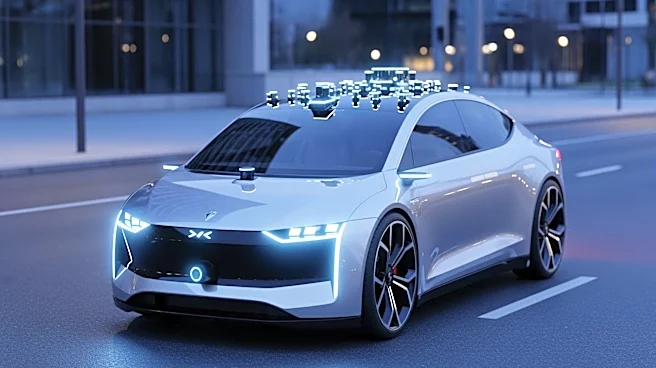
Lawrence Technological University (LTU) has secured first place in the Self-Drive Challenge at the 33rd annual Intelligent Ground Vehicle Competition (IGVC), held at Oakland University. The LTU team, known as 'rACTor', excelled in the competition by achieving
a perfect score of 2,100 points, outperforming other teams with their speed. The competition involved building and programming autonomous vehicles to navigate a real-world outdoor urban road environment without human intervention. The LTU team completed the course in two minutes and 48 seconds, significantly faster than their closest competitor, Hosei University from Japan. The event was co-hosted by Oakland University, the Association for Unmanned Vehicle Systems International (AUVSI) Great Lakes, and the U.S. Army’s Ground Vehicle Systems Center.
Why It's Important?
The victory at the IGVC highlights the growing capabilities and innovation in autonomous vehicle technology, particularly in educational settings. LTU's success demonstrates the effectiveness of integrating real-world applications into academic curricula, preparing students for future challenges in the field of robotics and AI. This achievement not only brings recognition to LTU but also underscores the importance of multidisciplinary design experience in engineering education. The competition provides students with valuable skills in business, engineering management, and public relations, enhancing their employability and industry readiness. The involvement of automotive and defense sponsors further bridges the gap between academia and industry, fostering collaboration and innovation.
What's Next?
Following their success in the Self-Drive Challenge, LTU plans to extend their research focus to include speed, as they participate in the Indy Autonomous Challenge. This new venture will involve controlling super-fast Indy race cars, driving at speeds approaching 200 mph. The continued participation in such high-profile competitions will likely enhance LTU's reputation in the field of autonomous vehicle technology and provide students with even more advanced learning opportunities. The ongoing collaboration with industry sponsors will also continue to offer students insights into industrial design and employment opportunities.