






What's Happening?
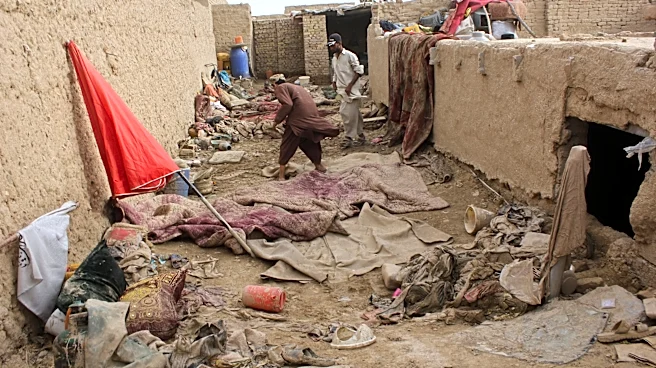
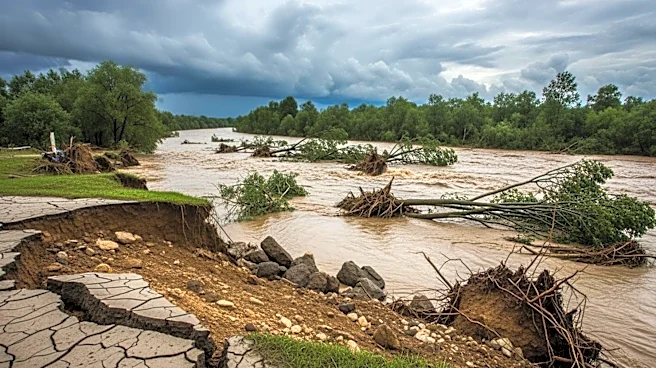
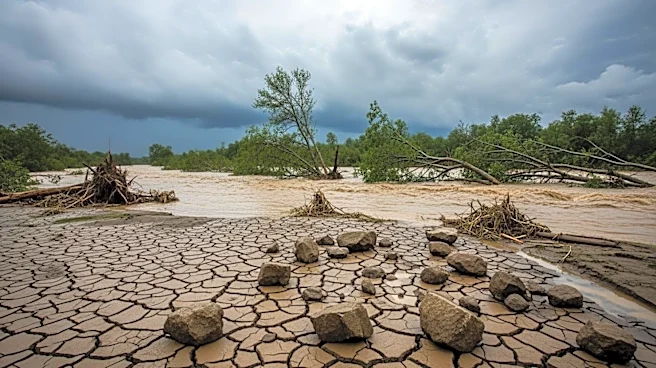
Afghanistan is experiencing severe weather conditions that have led to widespread flooding and landslides, resulting in at least 110 deaths. The Disaster Management Authority reported that storms and heavy rainfall began approximately 12 days ago, affecting
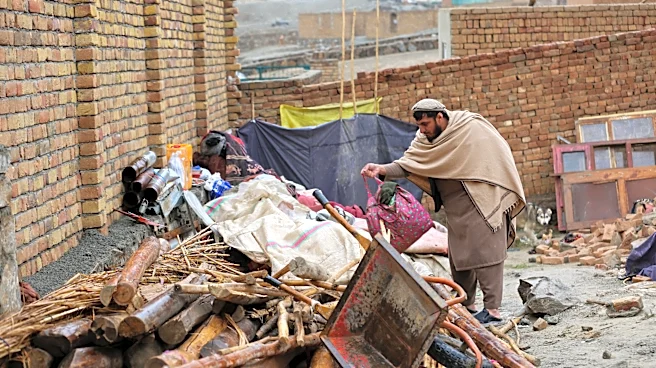
most of the country's 34 provinces. In the past 24 hours alone, 11 people have died, and six have been injured. Additionally, seven individuals are missing, believed to have been swept away by floodwaters. The extreme weather has also caused significant infrastructure damage, with 958 homes completely destroyed and over 4,000 partially damaged. The Defense Ministry has been involved in rescue operations, including airlifting stranded individuals to safety. Authorities have issued weather warnings for further heavy rain, advising residents to avoid flood-prone areas.
Why It's Important?
The severe weather in Afghanistan highlights the vulnerability of the region to natural disasters, exacerbated by climate change. The destruction of homes and infrastructure poses a significant challenge to recovery efforts, impacting thousands of families. The situation underscores the need for improved disaster preparedness and response mechanisms in Afghanistan, a country already facing numerous socio-economic challenges. The international community may need to provide humanitarian aid to support recovery efforts and prevent further loss of life. The ongoing weather conditions also threaten to disrupt transportation and economic activities, further straining the country's resources.
What's Next?
With more heavy rain forecasted, Afghan authorities are likely to continue issuing warnings and conducting rescue operations. The government may seek international assistance to address the immediate humanitarian needs and long-term recovery efforts. The situation could prompt discussions on enhancing Afghanistan's infrastructure resilience to withstand future natural disasters. Additionally, the impact on agriculture and local economies may require targeted interventions to support affected communities.