







What's Happening?
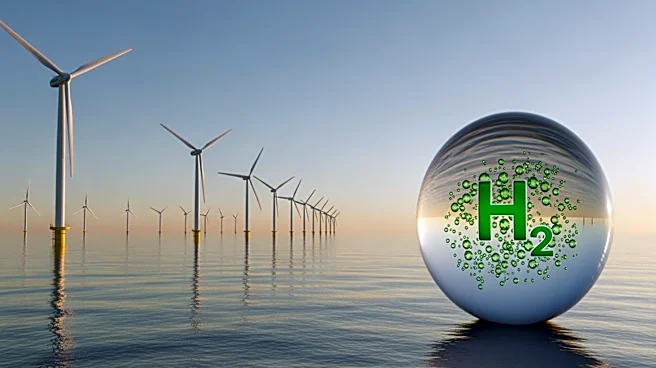
Hydrogen of Dutch Origin (H2DO) has launched a feasibility study for a 30-50 MW offshore green hydrogen project in the Dutch North Sea. This initiative aims to demonstrate the potential of offshore hydrogen production to support the expansion of offshore wind
capacity while alleviating pressure on onshore infrastructure. The study, funded by the Dutch Topsector Energie program, will explore the development of an offshore hydrogen production facility connected to the shore via pipeline. The project intends to convert electricity from offshore wind farms into green hydrogen at sea, thereby reducing grid congestion and the need for additional electricity transmission infrastructure. The study will deliver a concept design for an offshore hydrogen installation, including hydrogen export infrastructure, and assess technical, commercial, regulatory, and permitting requirements.
Why It's Important?
This project is significant as it aligns with the objectives of the Hamburg Declaration, which advocates for offshore hydrogen production to bolster renewable energy growth and enhance Europe's energy security. By converting wind-generated electricity into hydrogen at sea, the project could reduce the demand for onshore land and freshwater resources needed for electrolysis. This approach not only supports the expansion of renewable energy but also addresses infrastructure challenges associated with grid congestion. The study's outcomes could influence future energy policies and investments in renewable energy infrastructure, potentially leading to a more resilient and sustainable energy system in Europe.
What's Next?
The consortium, including partners like H2sea, Haskoning, and TCI Risk Management, aims to mature the concept to a level that allows progression to the next development phase. The preparation for a demonstration project is targeted to become operational by 2031. The study will also evaluate compliance with European renewable fuel standards and the comparative economics of offshore versus onshore hydrogen production. Successful implementation could pave the way for similar projects, influencing energy strategies and contributing to the EU's renewable energy targets.