





What's Happening?
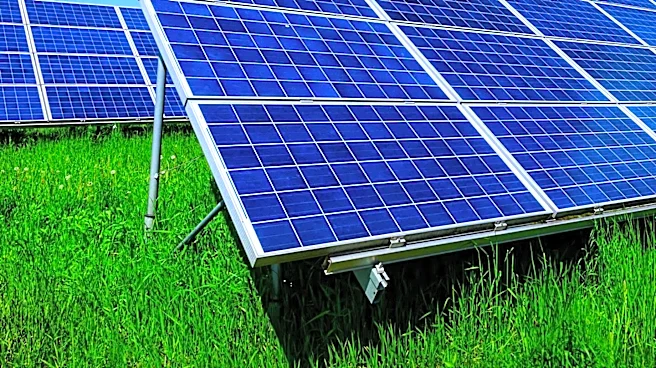
Michigan is considering House Bill 5764, which aims to allow residents to use plug-in solar systems to reduce their electricity bills. The bill, introduced by Rep. Will Snyder, D-Muskegon, would permit systems of up to 1,200 watts to connect through a standard
120-volt outlet without requiring advance utility approval. Instead, customers would notify their utility within 30 days of installation. This proposal comes as electricity rates in Michigan continue to rise, and plug-in solar systems are becoming more popular in Europe and the U.S. The bill represents a significant shift from current Michigan policy, which requires distributed-generation projects to be properly interconnected with the utility before operation.
Why It's Important?
The introduction of plug-in solar systems could significantly impact Michigan's energy landscape by providing a more affordable option for residents to generate their own electricity. This could lead to reduced electricity purchases from utilities, potentially lowering household energy costs. However, the bill also raises questions about electrical safety and utility regulation. Utilities may resist the change due to potential revenue loss and safety concerns. The bill's passage could set a precedent for other states considering similar legislation, influencing national energy policy and the adoption of small-scale solar systems.
What's Next?
As of August 8, 2026, HB 5764 remains in the House Energy Committee with no recorded vote. If the bill advances, it could face opposition from utility companies concerned about safety and revenue impacts. Lawmakers will need to balance the benefits of reduced regulation with the need for electrical safety. The outcome of this legislative process could influence the future of plug-in solar systems in Michigan and potentially across the U.S., as other states watch Michigan's approach to regulating small-scale solar installations.
Beyond the Headlines
The broader adoption of plug-in solar systems could lead to a cultural shift in how energy is consumed and generated at the household level. It may encourage more individuals to consider renewable energy options, contributing to environmental sustainability. Additionally, the bill could spark discussions about the role of utilities in a changing energy landscape and the need for updated regulations that accommodate new technologies while ensuring safety and reliability.