







What's Happening?
California homeowners with grid-tied solar systems and batteries are navigating new complexities under the Net Billing Tariff (NEM 3.0). When a solar battery reaches full capacity, the system's smart inverter redirects excess solar power. In grid-tied homes,
this excess energy is sent back to the utility grid. However, under NEM 3.0, the compensation rate for this exported electricity is drastically reduced to a wholesale rate, often as low as 4 to 8 cents per kilowatt-hour, compared to the higher retail rates paid under previous net metering structures. This change means that if a battery fills up too quickly, homeowners are forced to sell their surplus solar production for significantly less value. For off-grid systems, once the battery is full, the charge controller curtails or 'clips' the solar inverter, preventing panels from producing maximum power, as there is no grid to absorb the excess.
Why It's Important?
NEM 3.0 significantly alters the economic calculus for California solar homeowners, potentially reducing the financial benefits of their investments. The low export rates mean that maximizing self-consumption becomes paramount, shifting the focus from simply generating electricity to strategically managing its use. This change can lead to homeowners undersizing their battery systems if they are not careful, resulting in lost revenue from excess generation. It also highlights the critical role of intelligent inverters and charge controllers in optimizing energy flow. The shift incentivizes load shifting, where homeowners adjust their energy-intensive activities to align with peak solar production, such as charging electric vehicles or pre-cooling homes during midday. This policy change could influence future solar adoption rates and the design of residential solar-plus-storage systems in California.
What's Next?
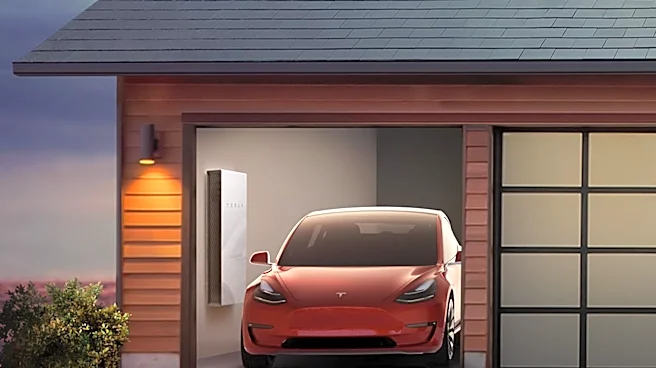
California homeowners are increasingly adopting strategies like load shifting to maximize the value of their solar power under NEM 3.0. This involves scheduling high-energy consumption activities, such as EV charging, HVAC pre-cooling, and pool pump operation, during peak solar production hours when batteries are full. The growth of Virtual Power Plants (VPPs) is also emerging as a significant development, allowing homeowners to link their batteries to a network that can discharge stored energy to the grid during peak demand, often at highly lucrative rates. This transforms a full battery from a passive storage device into an active grid asset. Modular battery systems, like Tesla Powerwall 3 and Enphase IQ, offer homeowners the flexibility to expand their storage capacity to better manage excess solar production. The market will likely see continued innovation in smart home energy management systems and VPP programs to help consumers adapt to the new tariff structure.
Beyond the Headlines
The implementation of NEM 3.0 in California reflects a broader tension in the energy transition: how to fairly compensate distributed energy resources while maintaining grid stability and utility profitability. This policy shift underscores the evolving relationship between individual prosumers and the centralized grid. It pushes homeowners to become more sophisticated energy managers, actively participating in demand-side management. The rise of VPPs suggests a future where individual home batteries collectively contribute to grid resilience, blurring the lines between consumer and utility. This model could set a precedent for other states grappling with similar challenges, potentially leading to a more dynamic and decentralized energy landscape where the 'home is the grid’s most underused asset' becomes a foundational principle for energy policy and infrastructure development.