




What's Happening?
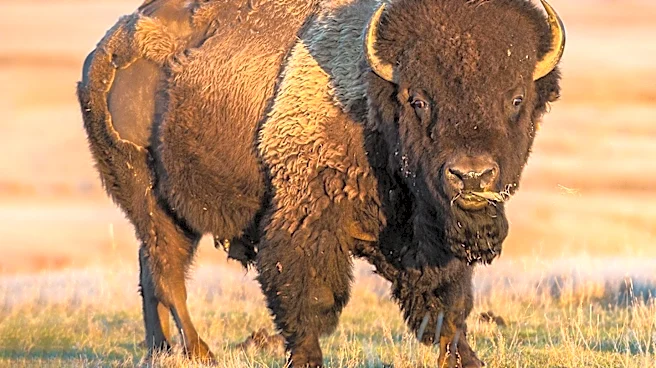
The ongoing summer heat on Antelope Island in Utah is causing bison to migrate to cooler areas within the state park. Wildlife biologist Benjamin Morris noted that the bison are moving to the east side of the island, where they can find cooler, moist
soil and vegetation. This shift in migration patterns is attributed to the high temperatures, which are drying out the soil and vegetation that the bison rely on. The park is also monitoring other wildlife, such as big-horned sheep, deer, and antelope, as they adapt to the changing conditions. Despite the heat, visitors continue to flock to the park to observe the wildlife.
Why It's Important?
The movement of bison and other wildlife on Antelope Island highlights the broader impact of climate conditions on ecosystems. As temperatures rise, animals are forced to adapt by seeking out cooler habitats, which can affect their health and the ecological balance of the area. This situation underscores the importance of monitoring wildlife and environmental conditions to ensure the sustainability of natural habitats. It also serves as a reminder of the potential long-term effects of climate change on biodiversity and the need for conservation efforts to protect vulnerable species.
What's Next?
Park officials will continue to monitor the bison and other wildlife to assess the impact of the heat on their health and behavior. They may implement measures to support the animals, such as providing additional water sources or managing vegetation to ensure adequate food supply. The situation may also prompt discussions on how to better prepare for and mitigate the effects of extreme weather on wildlife. Conservationists and researchers could use this data to inform strategies for protecting ecosystems in the face of climate change.