






What's Happening?
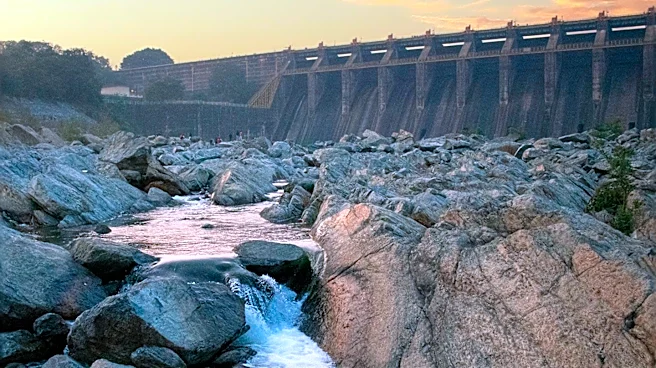
The demolition of the South Natick Dam in Massachusetts is underway, allowing the Charles River to flow freely for the first time in decades. This decision follows years of debate over the dam's future, with town leaders opting for removal to prevent
potential catastrophic breaches and to restore natural ecosystems. The dam, originally rebuilt during the Great Depression, had a history of failures and flooding. The removal is expected to open up one of the largest free-flowing sections of the river, enhancing local ecosystems and potentially transforming the area into a vibrant natural habitat.
Why It's Important?
The removal of the Natick Dam is significant for environmental restoration and community development. It represents a shift towards prioritizing ecological health and sustainability over maintaining aging infrastructure. The project is expected to reconnect ecosystems along the river and improve biodiversity. For the local community, this change could enhance recreational opportunities and increase property values. The decision also reflects broader trends in environmental policy, where natural restoration is increasingly favored to mitigate the impacts of climate change and habitat loss.
What's Next?
As the river returns to its natural state, local authorities and environmental groups will monitor the ecological impacts and work on restoring surrounding parks and recreational areas. The Charles River Watershed Association will likely continue its efforts to remove other priority dams, such as the Sanford Mill Dam. Community engagement will be crucial in maintaining the area's character and ensuring that the benefits of the project are realized. Long-term, the success of this project could serve as a model for similar initiatives across the country.