


What's Happening?
President Trump reportedly suggested that Iceland become the 51st U.S. state during an informal phone call with then-Prime Minister Bjarni Benediktsson in November 2024. The call, which occurred four days before Iceland's parliamentary election, was not
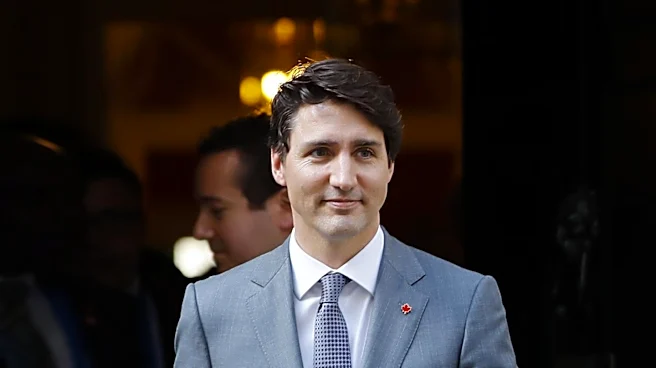
routed through regular diplomatic channels, and U.S. government officials were reportedly unaware of it. According to sources who have read a memo of the conversation, President Trump initially made the suggestion in a joking tone, referencing his friends' and family's interest in Iceland. However, he then urged Benediktsson to seriously consider the idea after the election. Public accounts of the call at the time focused on President Trump's interest in Iceland as a tourist destination and its culture. The Icelandic Prime Minister's Office and the Ministry for Foreign Affairs have refused to release the memo, citing potential damage to mutual trust and Iceland's interests. This incident follows a similar suggestion made by President Trump to then-Canadian Prime Minister Justin Trudeau regarding Canada becoming the 51st state, which President Trump later confirmed he was serious about in a Fox News interview. More recently, President Trump posted a map on Truth Social depicting North America, Central America, the Caribbean, Greenland, and Iceland under the U.S. flag, labeled 'United States of America,' which drew sharp criticism from Icelandic officials.
Why It's Important?
This report highlights a recurring theme in President Trump's foreign policy approach, where informal remarks and suggestions can carry significant diplomatic weight and potentially strain international relations. The suggestion of annexation, even if initially presented as a joke, touches upon fundamental principles of national sovereignty and self-determination, which are cornerstones of international law and diplomacy. For Iceland, a sovereign nation with a distinct cultural and political identity, such a proposition could be perceived as disrespectful and undermine the long-standing relationship with the United States. The refusal by Icelandic authorities to release the memo, citing potential harm to mutual trust, underscores the sensitivity and seriousness with which these comments are viewed. The broader context of President Trump's previous similar remarks to Canada and his recent social media post depicting an expanded U.S. territory, including Iceland and Greenland, suggests a pattern of behavior that could create uncertainty and tension among U.S. allies, particularly in strategically important regions like the Arctic. This approach could complicate future diplomatic engagements and potentially lead to a re-evaluation of alliances and partnerships.
What's Next?
The immediate future will likely involve continued scrutiny and discussion within diplomatic circles regarding the implications of President Trump's past and recent statements on national sovereignty. The Icelandic government's summoning of the U.S. Ambassador and Prime Minister Kristrún Frostadóttir's strong condemnation of the social media post indicate that Iceland will continue to assert its sovereignty and express disapproval of any perceived threats to it. It remains to be seen whether the U.S. State Department will issue any clarifying statements or if this incident will lead to a more formal diplomatic response from Iceland or other affected nations. The ongoing debate about the seriousness of President Trump's remarks—whether they are jokes or veiled policy intentions—will likely persist, influencing how foreign governments engage with future U.S. administrations. The incident could also prompt other nations to reinforce their diplomatic protocols and public messaging regarding their sovereignty in response to similar informal or unconventional communications.
Beyond the Headlines
Beyond the immediate diplomatic fallout, this incident raises deeper questions about the nature of international relations in an era of unconventional political communication. The use of social media and informal channels by high-ranking officials can blur the lines between personal opinion, jest, and official policy, creating ambiguity and potential for misinterpretation. This challenges traditional diplomatic norms and protocols, which rely on formal communication and established channels to convey policy and intent. The repeated suggestions of annexation, even if not seriously intended by President Trump, can have a cumulative effect on how the U.S. is perceived globally, potentially eroding trust and fostering resentment among allies. It also highlights the psychological impact of such statements on the national identity and pride of smaller nations. The incident could contribute to a broader re-evaluation of how nations protect their sovereignty and manage their relationships with more powerful states, especially when faced with rhetoric that appears to disregard established international norms.