


What's Happening?
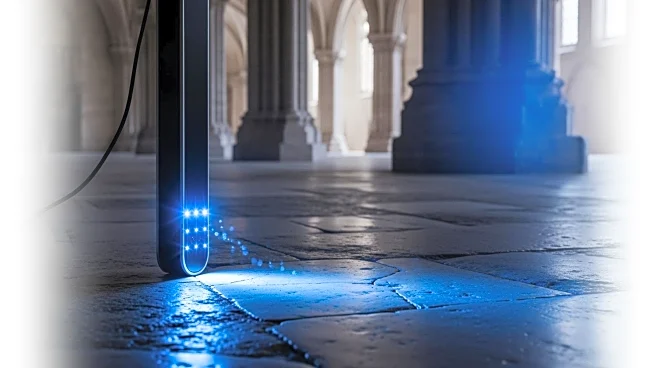
A groundbreaking project is underway at Lincoln Cathedral, where archaeologists are using ground-penetrating radar (GPR) to uncover the site's hidden history. This marks the first complete GPR survey of a cathedral in England, aiming to reveal evidence
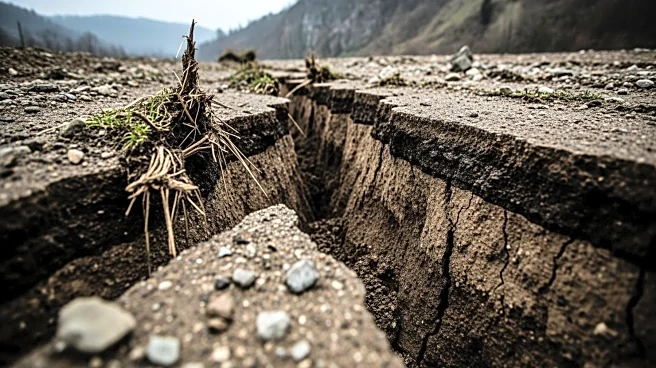
of earlier structures predating the 13th-century building. The survey, led by Dr. Jonathan Clark, seeks to map voids beneath the paving and locate central heating pipework, while also uncovering historical layers of the cathedral. The project has already provided insights into the cathedral's past, including its original Norman construction and subsequent rebuilding after an earthquake in 1185.
Why It's Important?
The use of GPR at Lincoln Cathedral represents a significant advancement in archaeological methods, allowing researchers to explore historical sites without invasive excavations. This project could reshape understanding of the cathedral's architectural evolution and its role in England's religious and cultural history. The findings may also enhance heritage conservation efforts and inform future restoration projects. Additionally, uncovering previously unknown burials and structures could provide valuable insights into the lives of historical figures associated with the cathedral.
What's Next?
The results of the GPR survey are expected in the spring, potentially revealing new historical insights and guiding future archaeological research at Lincoln Cathedral. The findings could lead to further exploration of the site, including detailed studies of uncovered structures and artifacts. The project may also inspire similar surveys at other historical sites, promoting the use of non-invasive technologies in archaeology. As the survey progresses, it may attract public interest and support for heritage preservation initiatives.