






What's Happening?
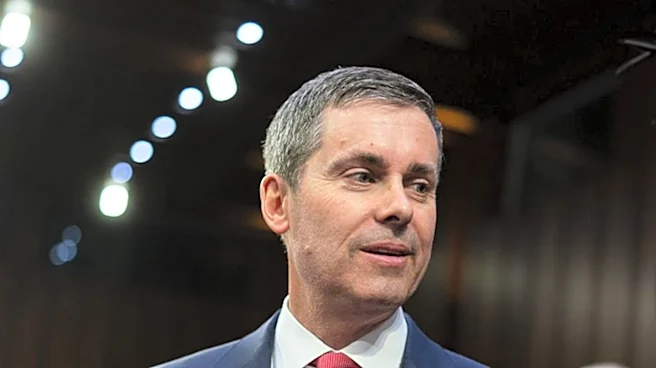
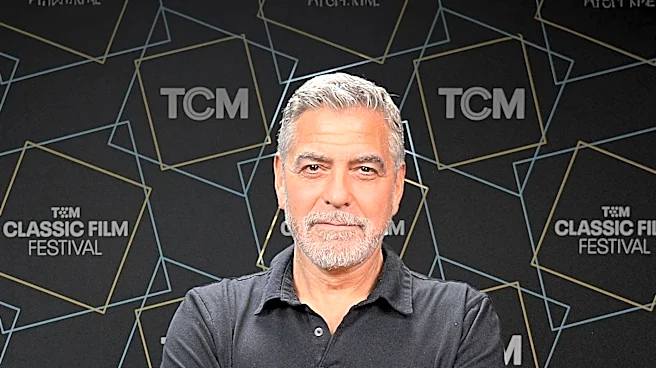
During the Venice Film Festival, actor and filmmaker George Clooney voiced his skepticism regarding the U.S. government's capacity to effectively regulate artificial intelligence (AI). Clooney highlighted his concern by referencing instances where government officials,
such as a 94-year-old Chuck Grassley, appeared to lack fundamental understanding of technology during testimonies. He suggested that individuals with such limited technological comprehension are not suitable to be entrusted with the critical task of AI regulation. Clooney emphasized that the dangers of AI extend beyond the creation of falsehoods, noting that it could lead to a questioning of verifiable facts and the blurring of lines between truth and 'fake news,' potentially giving equal weight to factual information and denials of historical events like the Holocaust.
Why It's Important?
George Clooney's comments underscore a significant and growing concern within the technology and entertainment sectors, and among the public, about the governance of AI. His remarks highlight a perceived gap in technological literacy among some policymakers, which could impede the development of effective and informed regulations for rapidly advancing AI technologies. This issue is critical for the U.S. as AI continues to integrate into various industries, from healthcare to finance, and its unregulated proliferation could have profound societal impacts, including the spread of misinformation and the erosion of trust in verifiable information. The entertainment industry, in particular, faces challenges with AI-generated content and deepfakes, making robust and intelligent regulation crucial for protecting intellectual property and maintaining artistic integrity. Clooney's public stance adds a prominent voice to the call for more knowledgeable oversight of AI.
What's Next?
Clooney's statements at the Venice Film Festival are likely to fuel ongoing discussions about AI regulation, potentially prompting further dialogue among lawmakers, tech leaders, and the public. While he did not propose specific regulatory bodies or frameworks, his critique suggests a need for policymakers with a deeper understanding of technology. This could lead to increased pressure on legislative bodies to consult with technology experts, scientists, and industry leaders to develop more informed and forward-thinking AI policies. The broader conversation will likely continue to focus on balancing innovation with ethical considerations, data privacy, and the prevention of misuse. The entertainment industry, already grappling with AI's implications for creative work, may also see renewed efforts to establish industry-specific guidelines or advocate for particular legislative approaches.
Beyond the Headlines
The deeper implication of Clooney's remarks touches upon the fundamental challenge of governing rapidly evolving technologies in a democratic society. His concern about AI's potential to blur the lines between truth and falsehood speaks to a broader crisis of epistemology in the digital age, where the authority of facts is increasingly contested. This erosion of shared reality could have profound consequences for civic discourse, political stability, and the ability of societies to address complex challenges. Furthermore, the perceived technological illiteracy of some lawmakers raises questions about the adequacy of current governance structures to handle future technological disruptions. This situation calls for a re-evaluation of how expertise is integrated into policymaking and the importance of continuous education for leaders in an increasingly tech-driven world.