








What's Happening?
A new study co-authored by Dr. Elysia Poggi Davis, a psychology professor at the University of Denver, and published in the journal Nature Communications, indicates that treating depression in pregnant women with short-course talk therapy can positively
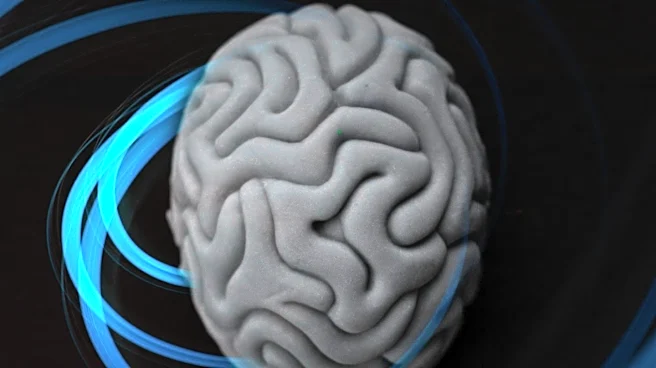
influence their babies' brain development before birth. The research focused on an intervention called MOMCare, a brief interpersonal psychotherapy tailored for prenatal depression, consisting of eight 50-minute sessions. The study enrolled 234 pregnant women with depressive symptoms, randomly assigning them to either receive MOMCare or mental health education and referrals. Previous findings from this ongoing project showed MOMCare effectively reduced depression diagnoses from 36% to 6% and increased the likelihood of carrying the baby to term. The current study utilized MRI imaging to measure infant brain areas shortly after birth, revealing that infants whose mothers received MOMCare had a 5% smaller hippocampal volume, an area crucial for learning, memory, and emotional regulation. Six months later, these infants showed less negative emotional responses to unfamiliar stimuli, suggesting improved emotional regulation despite the smaller hippocampal volume.
Why It's Important?
This research is significant because depression affects up to one in five women during pregnancy, increasing risks for complications like high blood pressure and preterm birth, and raising the child's risk of mental illness. The study highlights a unique opportunity during pregnancy to improve the health of both mother and baby simultaneously, as women typically have more contact with the healthcare system during this period. The findings suggest that targeted, non-invasive, and relatively low-cost interventions like MOMCare can make a substantial difference. This is the first study to demonstrate that treating maternal depression during pregnancy may directly impact infant brain development, aligning with other trials showing benefits for babies' emotional development and stress-related hormones. These results could provide biological explanations for the critical importance of addressing prenatal depression and support public health initiatives aimed at increasing accessible mental health support for pregnant women.
What's Next?
The researchers plan to continue following the mothers and babies through early childhood to understand the long-term effects of the observed brain changes on development. This longitudinal tracking will help determine whether treating maternal depression during pregnancy yields lasting benefits for children's mental health and overall well-being. Further research is needed to clarify the exact mechanisms by which reducing maternal depression influences the baby's brain, such as the potential role of stress-related hormones or inflammation. If these findings are consistently confirmed, they could lead to broader implementation of targeted psychotherapy interventions like MOMCare in prenatal care, potentially transforming approaches to maternal and infant health by integrating mental health support more comprehensively into standard pregnancy care.
Beyond the Headlines
The counterintuitive finding that a smaller hippocampal volume in infants is associated with stronger emotional regulation challenges conventional understanding, as smaller brain volume in adults is often linked to negative effects. This suggests that in infancy, faster brain growth might not always be advantageous, with one hypothesis proposing that stress could accelerate early brain development. This opens new avenues for understanding brain plasticity and developmental trajectories in early life. The study also underscores the ethical imperative to provide comprehensive mental health care during pregnancy, recognizing its profound intergenerational impact. Culturally, these findings could help destigmatize prenatal depression and encourage more open discussions about mental health during pregnancy, fostering a supportive environment for expectant mothers and promoting healthier developmental outcomes for their children.