





What's Happening?
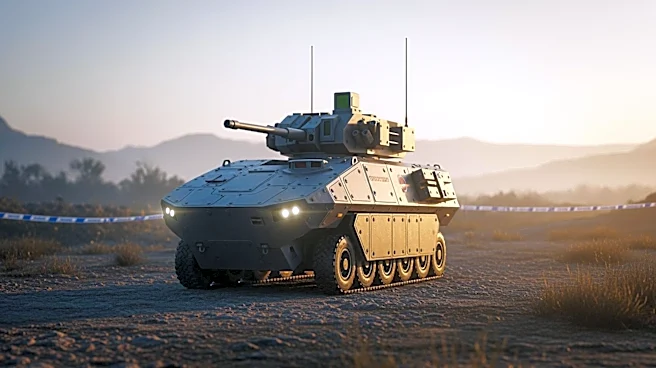
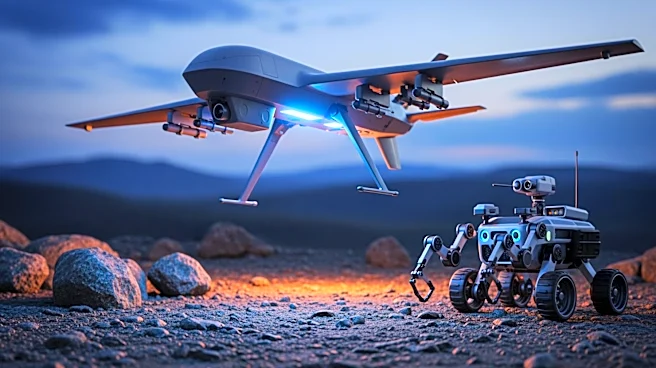
The U.S. Army is actively pursuing the development of an autonomous unmanned ground vehicle (UGV) to enhance battlefield logistics and casualty evacuation. According to a government notice, the UGV is intended to operate in the 'last tactical mile,' a critical
area between support units and forward lines where supplies and casualties are most vulnerable to enemy observation and fire. The Army's initiative is driven by the need to navigate complex terrains without GPS, maintain a low signature, and integrate seamlessly with military networks. This development is influenced by the ongoing conflict between Russia and Ukraine, which has demonstrated the effectiveness of UGVs in reducing risks and increasing mission effectiveness.
Why It's Important?
The introduction of autonomous UGVs in military operations represents a significant advancement in battlefield logistics and casualty management. By reducing the risk to human personnel, these vehicles can improve the efficiency of supply delivery and medical evacuations in high-threat environments. The technology is expected to enhance the Army's operational capabilities, particularly in areas characterized by persistent enemy surveillance and rapid application of lethal effects. This move aligns with broader military trends towards automation and unmanned systems, potentially setting a precedent for future innovations in defense technology.
What's Next?
Industry responses to the Army's notice are due by April 28, indicating a timeline for potential development and deployment. As the Army evaluates proposals, it may lead to collaborations with defense contractors specializing in autonomous systems. The successful implementation of UGVs could prompt other branches of the military to adopt similar technologies, further integrating unmanned systems into various operational contexts. Additionally, ongoing conflicts may continue to serve as testing grounds for these innovations, influencing future military strategies and procurement decisions.