



What's Happening?
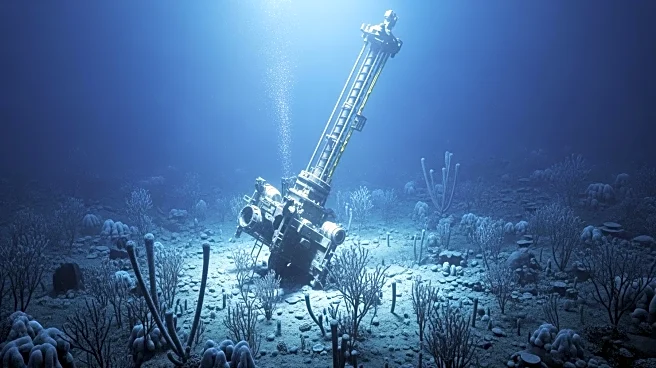
A recent industrial deep-sea mining trial conducted in the NORI-D contract area has shown significant impacts on macrofaunal biodiversity. The trial, which involved a prototype polymetallic nodule collection vehicle, resulted in a 37% decrease in macrofaunal densities
within the mining path. The study used an asymmetrical Before-After-Control-Impact (BACI) design to assess the environmental impacts, revealing that the disturbance led to notable changes in species diversity and abundance.
Why It's Important?
The findings highlight the potential ecological risks associated with deep-sea mining, a growing industry driven by the demand for rare minerals. The significant reduction in macrofaunal densities underscores the need for stringent environmental assessments and regulations to mitigate the impact of such activities. This research could influence policy decisions and lead to the development of more sustainable mining practices.
What's Next?
Further studies are needed to understand the long-term ecological impacts of deep-sea mining and to develop strategies for minimizing environmental damage. Policymakers and industry leaders may need to collaborate on creating guidelines that balance economic interests with environmental conservation.
Beyond the Headlines
The trial raises ethical questions about the exploitation of deep-sea environments and the responsibility of industries to protect biodiversity. It also highlights the need for international cooperation in managing and regulating deep-sea mining activities.