



What's Happening?
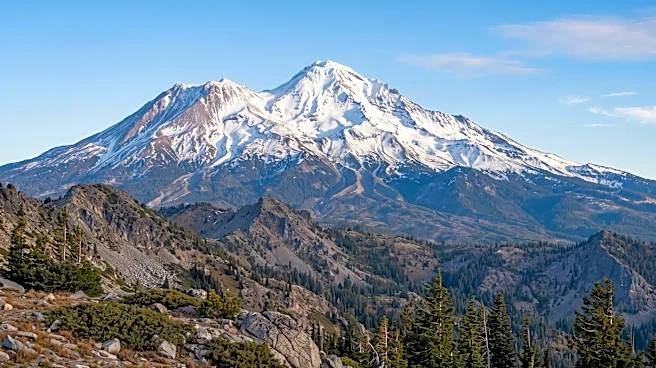
Three climbers on California's Mount Shasta required a multi-day emergency rescue after relying heavily on Google Gemini AI for their trip planning. The group, which set out for an eight-hour ascent, ended up lost for three days after one climber sustained
an injury. The Siskiyou County Sheriff’s Office reported that the climbers were advised by Gemini to bring significantly less food and water than needed, contributing to their predicament. Additionally, their phone batteries died, and backup batteries failed, leaving them without offline maps and the injured hiker without a headlamp. This incident underscores the dangers of using generative AI tools, which predict patterns from unverified web sources, as a sole source of critical information for real-world activities like mountain climbing.
Why It's Important?
This incident highlights a critical safety concern regarding the increasing reliance on artificial intelligence for practical advice, particularly in high-stakes situations. The misguidance provided by Google Gemini AI directly contributed to a life-threatening scenario, demonstrating that AI, despite its sophistication, can overlook crucial details and provide unreliable information. This has significant implications for public safety, as individuals may increasingly turn to AI for guidance in areas requiring expert knowledge and real-world experience, such as outdoor recreation, medical advice, or legal matters. The event serves as a stark reminder that AI-generated advice should always be independently verified, especially when personal safety or well-being is at stake. It also prompts a broader discussion about the responsibilities of AI developers to clearly communicate the limitations of their tools and implement safeguards against potentially harmful advice.
What's Next?
Google's trust and safety team is investigating the climbing advice generated by Gemini, though they have been unable to reproduce the specific answers the climbers received. This investigation will likely focus on understanding how such erroneous advice was generated and what measures can be implemented to prevent similar incidents. The Siskiyou County Sheriff’s Office has issued a public warning against relying solely on AI for trip planning, and other authorities may follow suit with similar advisories. This event could lead to increased calls for AI companies to develop more robust disclaimers, integrate real-world expert verification into their systems, or even restrict AI from providing advice in certain high-risk domains without explicit human oversight. Users are expected to be more cautious and critical of AI-generated information, especially for activities with significant safety implications.
Beyond the Headlines
The Mount Shasta incident exposes a deeper societal challenge: the potential for AI to erode critical thinking and independent verification skills. As AI becomes more ubiquitous, there's a risk that users may implicitly trust its outputs without questioning their accuracy or source. This 'automation bias' can have severe consequences, as seen in this case. Beyond immediate safety, this raises questions about digital literacy and the need for education on how to critically evaluate AI-generated content. It also highlights the inherent limitations of generative AI, which, despite its ability to synthesize vast amounts of data, lacks real-world understanding, common sense, and the ability to discern context-specific nuances. This event could catalyze a broader movement towards developing 'responsible AI' frameworks that prioritize safety, transparency, and human oversight, especially in applications that directly impact human lives.