







What's Happening?
The AAA Foundation for Traffic Safety has released a study indicating that animal-related crashes are a significant issue across the United States, resulting in at least 353,800 police-reported crashes, 49,725 injuries, and 277 deaths each year. These
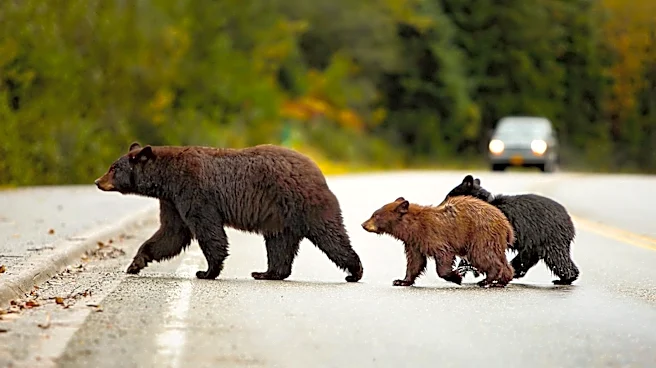
figures are likely underestimates, as many non-fatal incidents may go unreported to law enforcement. The study, which utilized crash databases from the U.S. Department of Transportation and detailed data from North Carolina, Ohio, and Pennsylvania, found that the Midwest experiences the highest number of animal-related crashes, with the Northeast also showing a substantial share. Such incidents are most prevalent in the fall, peaking in November. A key finding suggests that taking sudden evasive action to avoid striking an animal might be riskier than hitting it, as fatal crashes often involve more severe secondary events like striking trees or other vehicles. However, this recommendation may not apply to encounters with larger animals such as moose, elk, or bison. Motorcyclists are particularly vulnerable, accounting for nearly half of all fatalities in these crashes. Most incidents occur in rural areas, often at night, and on roads with speed limits of 45 mph or higher.
Why It's Important?
This report highlights a critical and often underestimated road safety concern with significant implications for public health and transportation policy in the U.S. The high number of crashes, injuries, and fatalities underscores the need for increased awareness among motorists and potential adjustments in road safety strategies. The finding that evasive maneuvers can be more dangerous than direct impact challenges conventional driver instincts and suggests a need for targeted public education campaigns. The disproportionate impact on motorcyclists calls for specific safety advisories and potentially infrastructure improvements in high-risk areas. Economically, these crashes lead to substantial costs, including medical expenses, property damage, and lost productivity. For insurance companies, the frequency and severity of these incidents contribute to claims and potentially higher premiums. Understanding the geographical and seasonal patterns of these crashes can inform state and local transportation departments in deploying preventative measures, such as wildlife crossings or enhanced signage, particularly in the Midwest and Northeast during autumn months. The study also implicitly points to the need for better data collection on the types of animals involved to refine mitigation efforts.
What's Next?
The AAA Foundation's findings are expected to prompt further discussions among traffic safety organizations, state transportation departments, and law enforcement agencies regarding effective mitigation strategies. Public awareness campaigns may be developed to educate drivers on the risks associated with animal encounters, emphasizing safe driving practices, especially in rural and high-speed areas during peak seasons. There could be a push for more detailed data collection on animal types involved in crashes to tailor prevention efforts more effectively. For instance, areas with high deer populations might see increased implementation of deer-specific deterrents or warning systems. Policy discussions may also arise concerning infrastructure improvements, such as fencing or wildlife underpasses, in identified hotspots. Additionally, the vulnerability of motorcyclists could lead to specialized safety recommendations or gear advancements. The report's insights might also influence driver education programs, incorporating specific guidance on how to react safely when encountering animals on the road, balancing the risk of direct impact versus evasive maneuvers.
Beyond the Headlines
Beyond the immediate safety concerns, the prevalence of animal-related crashes reflects broader ecological and land-use issues. As human development expands into natural habitats, the interface between wildlife and roadways becomes more frequent, increasing the likelihood of such incidents. This situation raises questions about sustainable land management, wildlife conservation efforts, and urban planning. The study's emphasis on the dangers of evasive action also touches upon the psychological aspect of driving and human-animal interaction, where instinctual reactions may conflict with optimal safety outcomes. Furthermore, the economic burden of these crashes extends beyond direct costs, impacting wildlife populations and potentially leading to increased culling or management efforts in certain areas. The data could also spur technological innovations in vehicle safety, such as advanced animal detection systems, to provide drivers with earlier warnings. Ultimately, addressing this issue requires a multi-faceted approach that integrates road safety, environmental conservation, and public education to foster a safer coexistence between humans and wildlife.