






What's Happening?
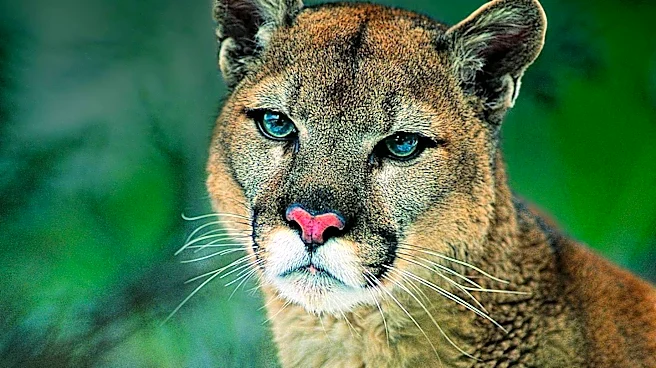
A recent study has revealed that mountain lions, also known as pumas or cougars, are contributing to a reduction in deer-vehicle collisions in Washington state. The research, published in the journal Current Biology, indicates that areas with a higher
presence of pumas experience significantly fewer deer-vehicle collisions. This is attributed to the behavioral changes in deer, which tend to avoid roads and become more active during daylight when pumas are nearby. The study analyzed data from wildlife cameras, puma tracking, and vehicle collision records across Washington's Olympic Peninsula. The findings suggest a 67% decrease in the probability of deer-vehicle collisions and a 76% reduction in the total expected number of collisions over five years in areas with active puma populations.
Why It's Important?
The study highlights the unexpected benefits of large predators in ecosystems, particularly in enhancing public safety by reducing wildlife-related vehicle accidents. This research underscores the importance of conserving large carnivores, as their presence can lead to indirect benefits for human communities, such as improved roadway safety. The findings challenge the traditional view of predators as threats, instead presenting them as valuable components of ecological balance that can provide measurable public safety advantages. This could influence conservation policies and public perception, promoting coexistence with large carnivores.
What's Next?
The study's authors hope to broaden public understanding of the ecological roles of large predators and encourage policies that support their conservation. As awareness of these benefits grows, there may be increased advocacy for protecting puma habitats and integrating wildlife considerations into urban planning and road safety measures. Conservation groups may use this data to push for more comprehensive wildlife management strategies that include the preservation of predator populations.