







What's Happening?
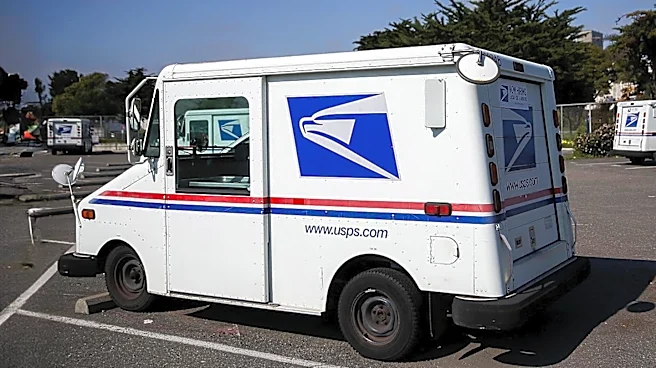
A federal appeals court has temporarily allowed the U.S. Postal Service (USPS) to proceed with a rule backed by President Trump that could significantly restrict mail voting ahead of the 2026 midterm elections. The D.C. Circuit Court of Appeals granted
USPS's request to pause an order from U.S. District Judge Emmet Sullivan, which had blocked the agency from implementing the proposed mail ballot rule. This rule, originating from a March executive order by President Trump, requires states to provide USPS with information about voters who request mail-in or absentee ballots, along with barcode information. The USPS would use these lists to determine whether to transmit ballot mail. Voting rights advocates have expressed concerns that this rule could lead to USPS refusing to deliver ballots to eligible voters if they are not on approved lists or if states do not comply with new federal requirements. The NAACP had challenged the rule, arguing it violated a 2021 court-enforced settlement requiring USPS to prioritize timely delivery of election mail through 2028. However, the appeals court found that the NAACP's challenge might not be ripe for review and that the rule might not violate the settlement.
Why It's Important?
The decision by the appeals court is significant as it temporarily revives a controversial rule that could impact mail voting, a critical component of the electoral process, especially during the midterm elections. The rule's implementation could affect voter turnout and election outcomes by potentially limiting access to mail-in voting, which has been a contentious issue in recent elections. The ruling underscores ongoing debates about election integrity and the balance between federal oversight and state control of election processes. If the rule is finalized, it could set a precedent for future federal involvement in state-managed election procedures, potentially reshaping how mail voting is conducted across the country. This development is crucial for political stakeholders, including voting rights groups, who argue that such measures could disenfranchise voters, particularly those in marginalized communities.
What's Next?
The case is not yet resolved, as the appeals court's decision only pauses the lower court's order while the USPS appeals. The legal battle over the rule will continue, with further court proceedings expected to determine the rule's legality. If the rule is ultimately upheld, states will need to comply with the new requirements, potentially leading to changes in how they manage mail-in voting. Political leaders, voting rights advocates, and state election officials will likely continue to monitor the situation closely, as the outcome could influence election strategies and voter engagement efforts leading up to the 2026 midterms.