
What's Happening?
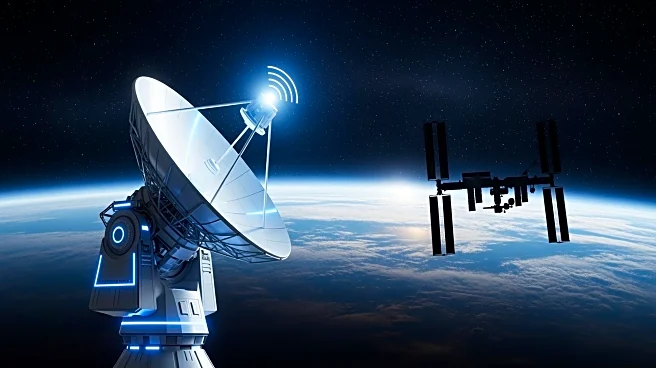
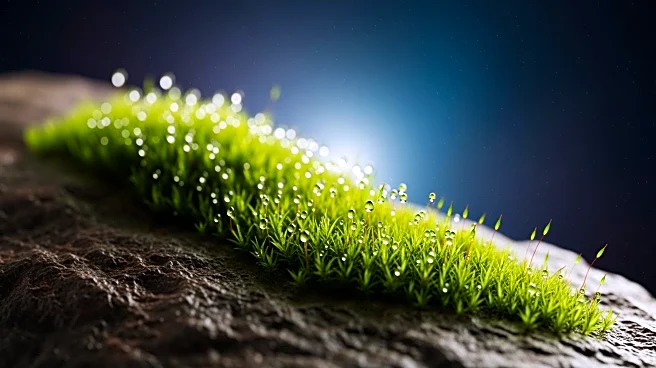
Researchers from Hokkaido University in Japan have discovered that moss sporophytes can survive the extreme conditions of outer space. The team placed moss on the exterior of the International Space Station
(ISS), where it was exposed to low gravity, high UV levels, and fluctuating temperatures. After 238 days, the moss was returned to Earth, and it was found that 80% of the spores survived, with 90% of these capable of germination. This study highlights the resilience of moss, suggesting it could survive in extraterrestrial environments for extended periods.
Why It's Important?
This discovery has significant implications for the future of space exploration and the potential for life beyond Earth. The ability of moss to survive in space conditions suggests that certain life forms from Earth may be more adaptable to extraterrestrial environments than previously thought. This could pave the way for future research into growing plants in space, which is crucial for long-term space missions and the possibility of colonizing other planets. The findings also contribute to our understanding of life's resilience and adaptability, offering insights into how life might exist elsewhere in the universe.
What's Next?
The research team plans to further investigate the mechanisms that allow moss to survive in space, which could lead to advancements in biotechnology and space agriculture. Future studies may explore the potential of using moss and other resilient plants in life support systems for space habitats. Additionally, this research could inspire new strategies for growing food in challenging environments on Earth, such as deserts or polar regions.