









What's Happening?
President William Ruto has announced significant new investments in West Pokot County, Kenya, as part of his 10-day tour of the North Rift Valley. These investments include an additional Sh300 million for a second market in Kapenguria, slated for construction
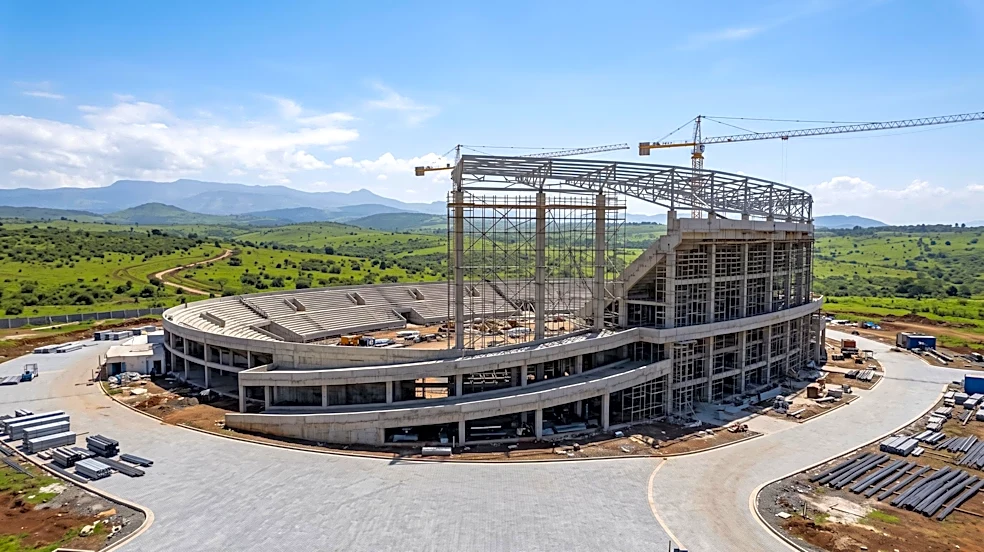
in January 2027, to accommodate the growing number of traders. This decision follows an assessment indicating that the existing Sh147 million Makutano Modern Market, currently 69% complete and due for completion in December 2026, will not suffice. Furthermore, the National Government will take over the construction of the 10,000-seater Makutano Stadium from the county government, injecting Sh800 million to ensure its completion and provide modern sporting facilities. In the healthcare sector, President Ruto laid the foundation stone for a 580-bed student hostel at the Kapenguria Kenya Medical Training College (KMTC), valued at Sh221 million under the Affordable Housing Programme. The government also plans to build 20 additional classrooms at KMTC to expand its capacity for training healthcare professionals. In terms of power, President Ruto flagged off the Last Mile Electricity Connectivity Project in Makutano, Kapenguria Constituency, committing Sh335 million to connect 1,719 homes to electricity.
Why It's Important?
These new investments are crucial for the socio-economic development of West Pokot County, addressing key areas of infrastructure, healthcare, and community services. The expansion of market facilities will directly benefit local traders and farmers, fostering economic growth and improving livelihoods by providing better access to markets. The government's commitment to completing the Makutano Stadium signifies an investment in youth development and sports, offering opportunities for talent nurturing and community engagement. The construction of a student hostel and additional classrooms at KMTC will significantly boost the region's capacity to train healthcare professionals, which is vital for improving healthcare access and quality under the Universal Health Coverage initiative. The Last Mile Electricity Connectivity Project will enhance the quality of life for thousands of households, supporting education, small businesses, and overall development. These initiatives collectively aim to uplift the living standards, create employment, and integrate West Pokot more fully into the national development agenda, demonstrating a concerted effort to address regional disparities.
What's Next?
Construction of the second market in Kapenguria is scheduled to commence in January 2027. The Makutano Modern Market is expected to be completed by December 2026. The National Government will proceed with the completion of the Makutano Stadium, injecting the allocated Sh800 million. The 580-bed student hostel at Kapenguria KMTC will continue its construction under the Affordable Housing Programme, alongside plans for 20 new classrooms. The Last Mile Electricity Connectivity Project will move forward to connect 1,719 homes in Makutano. These projects are part of a broader, ongoing development drive in the region, and their progress will likely be monitored by the government and local communities. Further announcements or expansions of these initiatives may occur based on their successful implementation and the evolving needs of the county.
Beyond the Headlines
The comprehensive nature of these investments in West Pokot County extends beyond immediate economic and infrastructural gains, touching upon deeper societal transformations. By focusing on education and healthcare infrastructure, the government is investing in human capital development, which is fundamental for long-term sustainable growth and poverty reduction. The emphasis on sports facilities can foster community cohesion and provide constructive outlets for youth, potentially reducing social issues. The increased access to electricity and modern markets can empower women and small-scale entrepreneurs, driving inclusive economic participation. These initiatives also reflect a strategic effort to integrate historically marginalized regions into the national development narrative, aiming to reduce regional inequalities and enhance national unity. The success of these projects could serve as a blueprint for similar interventions in other underserved areas, highlighting the government's commitment to equitable development and improved living standards across the nation.