




What's Happening?
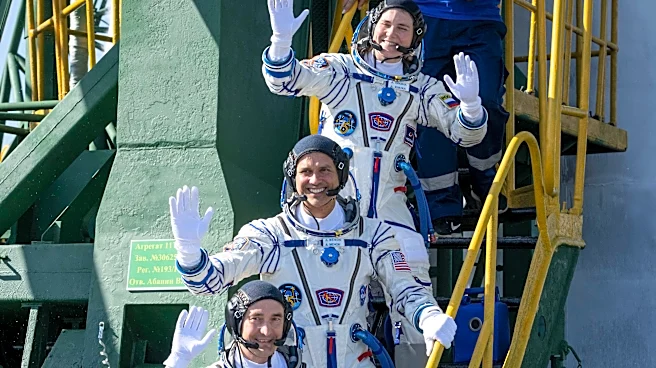
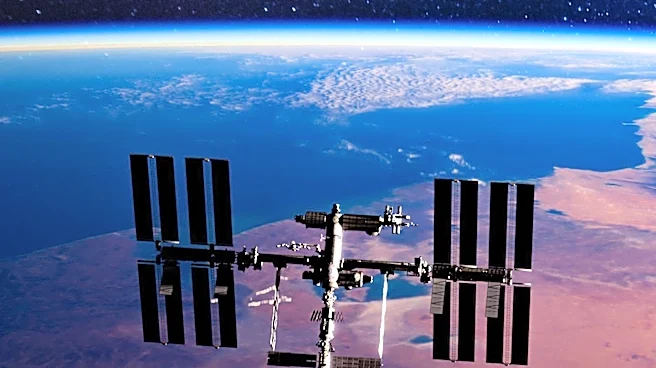
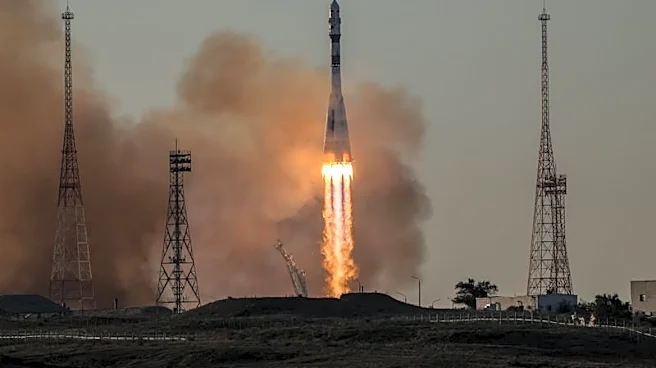
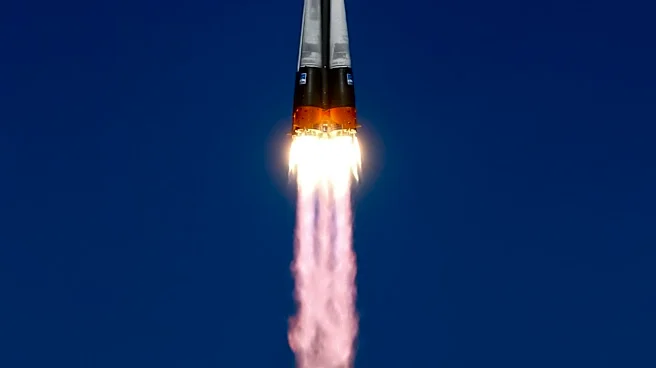
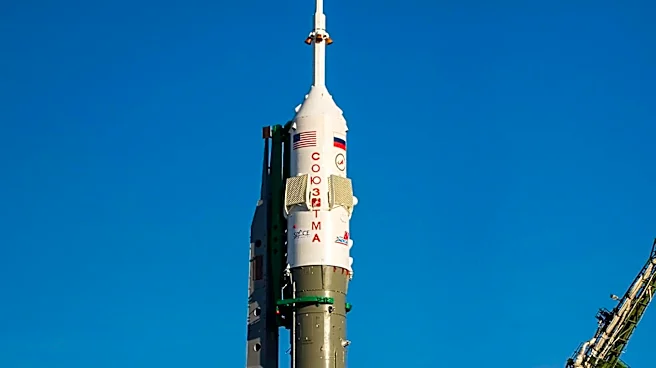
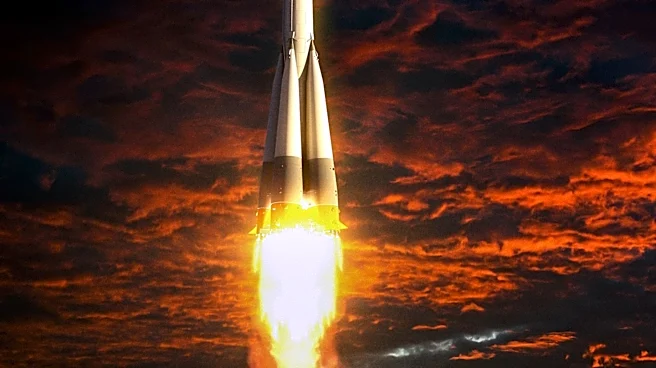
The Soyuz MS-29 spacecraft successfully launched from the Baikonur Cosmodrome in Kazakhstan, carrying NASA astronaut Anil Menon and Roscosmos cosmonauts Pyotr Dubrov and Anna Kikina to the International Space Station (ISS). The launch occurred at 10:47
a.m. EDT, and the spacecraft is set to dock with the ISS after a two-orbit, three-hour journey. This mission marks Menon's first spaceflight, while Dubrov and Kikina are on their second missions. The crew will spend approximately eight months aboard the ISS, conducting various scientific experiments and technology demonstrations.
Why It's Important?
This mission underscores the ongoing collaboration between NASA and Roscosmos, despite geopolitical tensions. The presence of NASA Administrator Jared Isaacman at the launch, the first such visit in eight years, highlights the importance of international cooperation in space exploration. The mission will contribute to scientific research and technological advancements, particularly in areas like semiconductor production and medical technology, which have significant implications for both space exploration and terrestrial applications.
What's Next?
The crew will join existing members on the ISS and begin their scheduled scientific and technological tasks. Their work will include experiments in semiconductor crystal production, augmented reality in medical procedures, and bioprinting in microgravity. These activities aim to advance human space exploration capabilities and improve life on Earth. The crew is expected to return to Earth in April 2027.