






What's Happening?
Carrboro Public Works has issued a public message urging residents to keep lithium-ion batteries out of trash and recycling carts. This advisory follows an incident last week where a Carrboro refuse truck caught fire due to a lithium-ion battery improperly
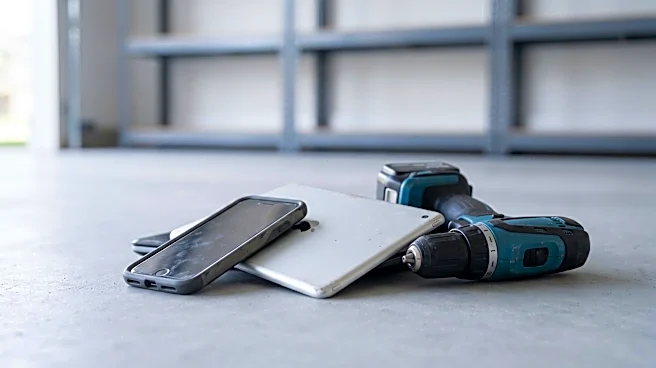
disposed of in the trash. Fortunately, a City of Durham Fire Department engine was directly behind the truck and quickly extinguished the blaze. Lithium-ion batteries are commonly found in various rechargeable devices such as cell phones, laptops, tablets, smartwatches, power tools, e-bikes, e-cigarettes, and vaping devices. The department emphasizes that these batteries pose a serious danger to collection crews, the public, and waste facilities if not disposed of correctly. Proper disposal not only prevents fires but also facilitates the recovery and reuse of valuable materials like lithium, nickel, and cobalt.
Why It's Important?
The improper disposal of lithium-ion batteries presents significant safety risks and environmental concerns across the U.S. The incident in Carrboro highlights the immediate danger of fires in waste collection vehicles and facilities, which can lead to property damage, injuries, and service disruptions. Beyond safety, the correct disposal of these batteries is crucial for environmental sustainability. Lithium, nickel, and cobalt are valuable resources that can be recovered and reused, reducing the need for new mining and mitigating the environmental impact associated with battery production. Furthermore, North Carolina is implementing a ban on landfill disposal of lithium-ion batteries starting December 1, 2026, under G.S. 130A-309.10, underscoring a growing regulatory push to address this issue. This legislative action reflects a broader national trend towards more responsible waste management practices for hazardous materials.
What's Next?
Carrboro Public Works is directing residents to designated battery drop-off locations, such as those found through The Battery Network or Orange County Solid Waste Management, to ensure safe and proper disposal. As the December 1, 2026, ban on landfill disposal of lithium-ion batteries approaches in North Carolina, public awareness campaigns and the establishment of accessible drop-off points will become even more critical. Local municipalities and waste management authorities are expected to increase efforts to educate the public on proper battery recycling methods. Businesses that sell or use devices containing lithium-ion batteries may also face increased pressure to provide or support recycling solutions. The long-term goal is to establish a robust and convenient infrastructure for battery recycling to prevent environmental contamination and recover valuable materials.
Beyond the Headlines
The issue of lithium-ion battery disposal extends beyond immediate safety concerns to broader implications for resource management and technological sustainability. The increasing prevalence of these batteries in everyday electronics and electric vehicles means that the volume of discarded batteries will continue to grow, necessitating comprehensive and scalable recycling solutions. The recovery of critical minerals like lithium, nickel, and cobalt from spent batteries can reduce reliance on foreign sources and mitigate the environmental and social impacts of mining. This shift towards a circular economy for batteries is vital for the U.S. to achieve its clean energy goals and enhance national security through resource independence. The Carrboro incident serves as a stark reminder that individual actions in waste disposal have collective consequences, highlighting the need for both public education and systemic improvements in recycling infrastructure.