







What's Happening?
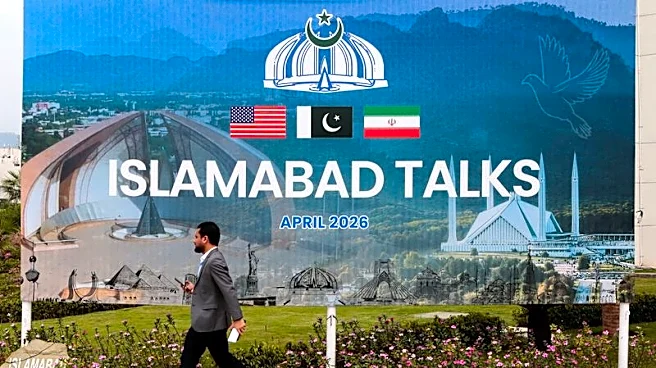
Recent talks between the United States and Iran in Islamabad, Pakistan, concluded without an agreement on several critical issues. The discussions, held on April 11 and 12, focused on Iran's stockpile of highly enriched uranium, control over the Strait
of Hormuz, and the release of $27 billion in frozen revenues. The U.S. demanded that Iran open the Strait to maritime traffic and hand over its uranium stockpile, but Iran countered with conditions that were not accepted by the U.S. President Trump emphasized that Iran did not compromise on its nuclear program, though he remains hopeful for future negotiations. The talks were complicated by internal divisions within the Iranian delegation, which included multiple factions with differing priorities.
Why It's Important?
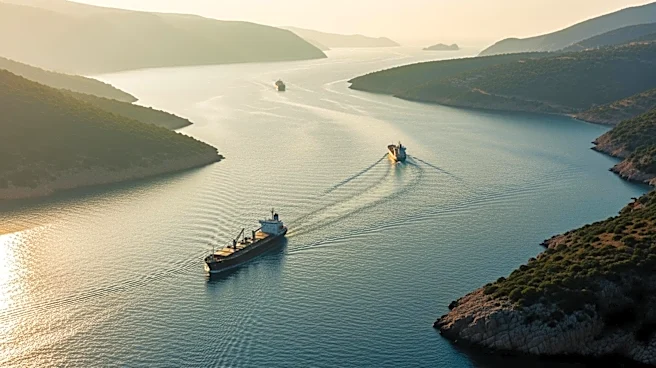
The failure to reach an agreement highlights ongoing tensions between the U.S. and Iran, particularly concerning nuclear proliferation and regional security. The Strait of Hormuz is a critical chokepoint for global oil shipments, and its closure could have significant economic repercussions. The U.S. Navy's efforts to maintain freedom of navigation in the area underscore the strategic importance of the Strait. The lack of progress in negotiations may lead to increased instability in the region, affecting global oil markets and international relations. The situation also reflects broader geopolitical dynamics, with potential implications for U.S. foreign policy and Middle Eastern alliances.
What's Next?
Future negotiations between the U.S. and Iran are likely, as both sides have expressed a willingness to continue discussions. However, the path forward remains uncertain, with significant obstacles to overcome. The U.S. may increase diplomatic and economic pressure on Iran to achieve its objectives, while Iran may seek to leverage its regional influence to gain concessions. The international community will be closely monitoring developments, as any escalation could have far-reaching consequences. The U.S. and its allies may also explore alternative strategies to address the challenges posed by Iran's nuclear program and regional ambitions.