


What's Happening?
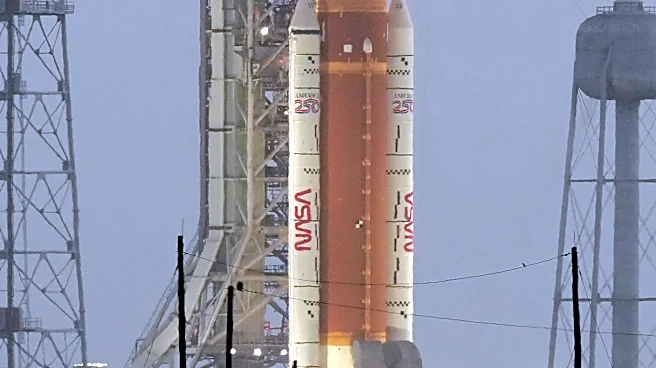
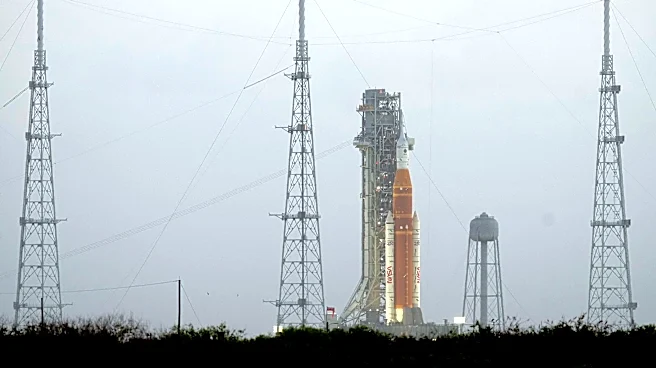
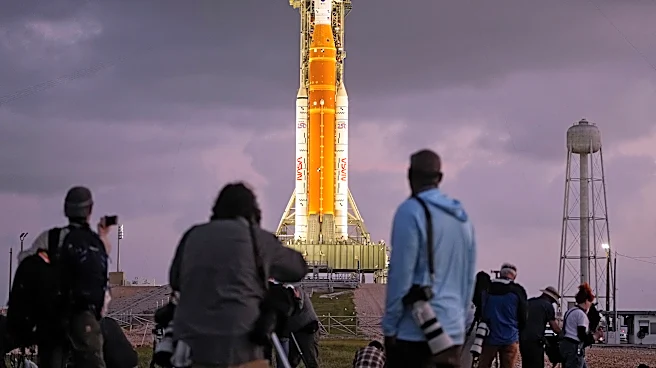
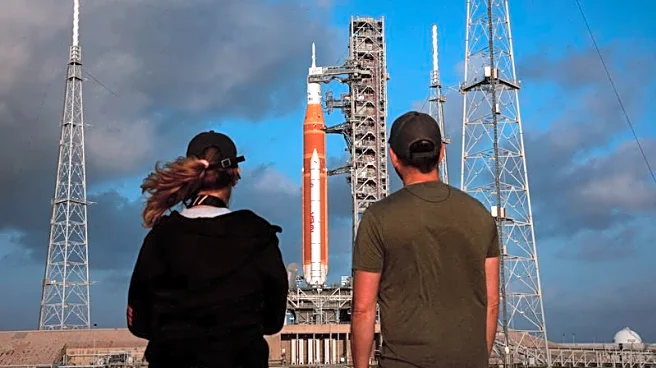
NASA has commenced the countdown for the Artemis II mission, marking humanity's first lunar launch in 53 years. The mission is set to launch from Kennedy Space Center in Cape Canaveral, Florida, with a 32-story Space Launch System rocket carrying four
astronauts. This mission is notable for its diverse crew, including a woman, a person of color, and a non-U.S. citizen. The Artemis II mission, initially scheduled for February, faced delays due to hydrogen fuel leaks and a clogged helium pressurization line. These issues have since been resolved, and the rocket is now ready for its scheduled launch. The mission will involve a quick orbit around the moon before returning to Earth, concluding with a Pacific Ocean splashdown.
Why It's Important?
The Artemis II mission represents a significant milestone in space exploration, as it is the first crewed mission to the moon since the Apollo program. This mission not only aims to advance scientific understanding but also to inspire a new generation by showcasing diversity in space exploration. The inclusion of a diverse crew highlights NASA's commitment to representation and inclusivity. The success of Artemis II could pave the way for future lunar missions and potentially establish a sustainable human presence on the moon, which could have far-reaching implications for scientific research and international collaboration in space.
What's Next?
Following the launch, the Artemis II mission will conduct a nearly 10-day journey, including a lunar flyby before returning to Earth. NASA has a launch window extending through the first six days of April, with plans to stand down until the end of the month if necessary. The mission's outcome will be closely monitored by international space agencies and could influence future lunar exploration strategies. The success of Artemis II is crucial for the subsequent Artemis III mission, which aims to land astronauts on the lunar surface.