







What's Happening?
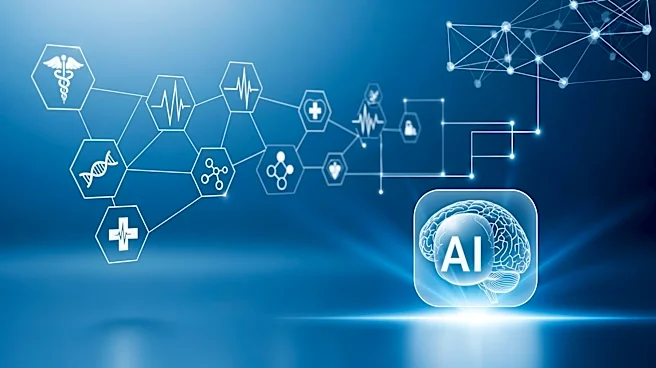
A Stanford Medicine-led study explores the integration of artificial intelligence (AI) in clinical decision-making, revealing its potential to enhance physician performance. The study, involving 70 physicians, examined how AI can be used as a decision support
tool in medical case evaluations. The findings indicate that when AI and physicians work in parallel, the collaboration leads to more effective decision-making compared to traditional methods. This approach shifts the perception of AI from a diagnostic tool to an active clinical collaborator, facilitating richer dialogue between human insight and machine calculation.
Why It's Important?
The integration of AI in healthcare decision-making has the potential to improve patient outcomes by providing more accurate and personalized treatment plans. By leveraging AI's analytical capabilities, physicians can enhance their clinical judgment and make more informed decisions. This collaboration could lead to significant advancements in healthcare delivery, particularly in complex cases where traditional methods may fall short. The study underscores the importance of developing effective workflows that maximize the strengths of both human and AI intelligence.
What's Next?
As AI continues to evolve, further research is needed to refine its role in clinical workflows and address challenges such as bias and accountability. Healthcare institutions and policymakers will need to establish guidelines for the ethical and responsible use of AI in medicine. Additionally, ongoing collaboration between academic institutions, healthcare providers, and technology companies will be crucial to advancing AI's integration in clinical practice and ensuring its benefits are realized across the healthcare system.