



What's Happening?
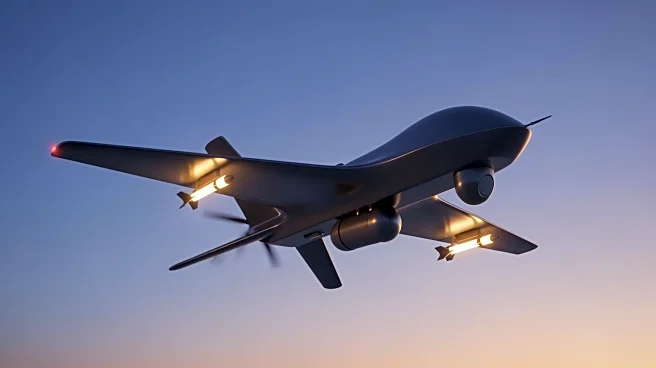
Airbus, in collaboration with Frankenburg Technologies, has successfully tested a missile-equipped interceptor drone designed to counter one-way attack drones. The test, conducted in northern Germany, involved the Bird of Prey interceptor autonomously
engaging a medium-sized attack drone using Frankenburg's Mark I air-to-air missile. This development addresses the challenge posed by low-cost, one-way munitions, such as Iran's Shahed drones, which have been used in conflicts in Ukraine and the Middle East. The interceptor drone is based on the Airbus Do-DT25 target drone and is designed to be a cost-effective solution for air defense.
Why It's Important?
The successful test of the Bird of Prey interceptor drone represents a significant advancement in air defense technology. As conflicts increasingly involve the use of low-cost drones, there is a growing need for affordable and effective countermeasures. The ability to intercept such drones at a lower cost could provide a strategic advantage to military forces, reducing reliance on expensive, high-end air-defense systems. This development could influence defense strategies and procurement decisions, particularly for nations facing asymmetric threats. The integration of this technology into NATO's air-defense architecture could enhance collective security measures.
What's Next?
Airbus and Frankenburg plan to conduct further test flights in 2026, including tests with live warheads, to demonstrate the system's operational capabilities to potential customers. The companies aim to integrate the Bird of Prey into NATO's air-defense architecture, enhancing its appeal to military forces seeking cost-effective solutions for drone defense. The ongoing development and testing of this technology could lead to broader adoption and deployment in various conflict zones, potentially reshaping air defense strategies globally.