



What's Happening?
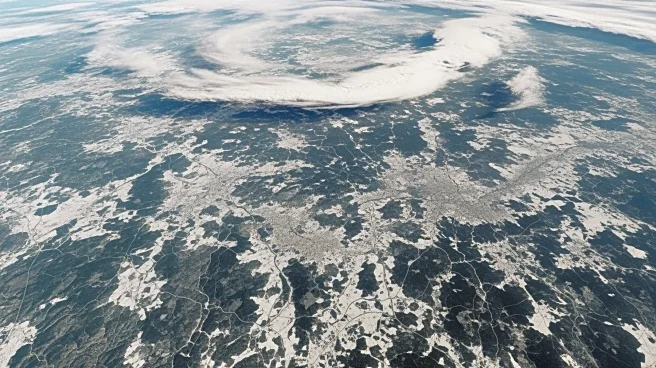
A significant winter storm in late January 2026 resulted in widespread snow coverage across North Carolina, an event captured by NASA's Terra satellite. The Moderate Resolution Imaging Spectroradiometer (MODIS) on the satellite revealed a continuous blanket
of snow stretching from the western mountain cities to the eastern beachfront towns. This marked the first time in over a decade that all 100 counties in North Carolina experienced measurable snowfall, according to the North Carolina State Climate Office. The storm was characterized by Arctic air lingering over the state, combined with moisture from a low-pressure system, leading to snow totals exceeding a foot in some mountainous regions. Cities like Charlotte and Raleigh saw significant snowfall, with Charlotte receiving nearly a foot, the most since 2004. Coastal areas, including Carteret County and the southern Outer Banks, also reported substantial snow, with Beaufort experiencing heavy blowing snow.
Why It's Important?
The unusual snowstorm highlights the variability and potential extremity of weather patterns affecting the southeastern United States. Such events can have significant impacts on infrastructure, transportation, and daily life, as seen with the hazardous road conditions and traffic disruptions reported. The storm also underscores the importance of satellite technology in monitoring and understanding weather phenomena, providing critical data for climate research and emergency response. The widespread snow coverage in a region unaccustomed to such events may prompt discussions on preparedness and adaptation strategies for future extreme weather occurrences.
What's Next?
In the aftermath of the storm, local authorities and residents will likely focus on recovery efforts, including clearing roads and repairing infrastructure damaged by the snow and high winds. The event may also lead to increased attention on climate resilience and the need for improved forecasting and response systems to handle similar weather events in the future. Additionally, the data collected by NASA's satellite could contribute to ongoing climate studies, helping scientists better understand the dynamics of winter storms in the context of a changing climate.
Beyond the Headlines
The storm's impact on North Carolina serves as a reminder of the broader implications of climate variability and the challenges it poses to regions not typically prepared for such weather extremes. It raises questions about the adequacy of current infrastructure and emergency response systems in dealing with unexpected climatic events. Furthermore, the event may influence public policy discussions on climate change adaptation and the allocation of resources to enhance resilience against future weather-related disruptions.