



What's Happening?
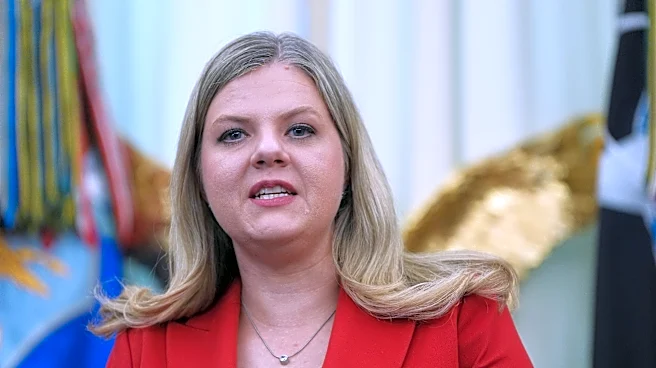
President Trump has chosen White House policy aide Heidi Overton to serve as the next commissioner of the Food and Drug Administration (FDA), according to a source familiar with the matter. This selection comes months after the previous chief, Marty Makary,
resigned. If confirmed by the Senate, Overton will take charge of an agency that has experienced the departure of over 3,000 staff members, including division heads, in the past year. The FDA is currently facing pressure to restore confidence among industry and public health groups due to concerns that the regulator has become overly politicized. Overton, a doctor by training, currently serves as the deputy director of the White House domestic policy council and previously worked at the America First Policy Institute, a conservative think tank. She received her medical degree from the University of New Mexico, trained in general surgery at Johns Hopkins, and pursued clinical-investigation research training at the Johns Hopkins Bloomberg School of Public Health. Her selection follows a White House event where President Trump announced an executive order advocating for a reduced childhood vaccine schedule and the separation of the measles, mumps, and rubella vaccine into three distinct shots, a process that could take years for drug developers to achieve.
Why It's Important?
The appointment of Heidi Overton to lead the FDA is significant due to the agency's critical role in public health and its recent challenges. The FDA is responsible for ensuring the safety and efficacy of drugs, vaccines, and medical devices in the U.S. The reported loss of over 3,000 staff members and concerns about politicization could impact the agency's ability to fulfill its mission effectively. A new leader will be tasked with rebuilding morale, restoring public trust, and navigating complex scientific and political landscapes. The administration's push for changes to the childhood vaccine schedule and the separation of the MMR vaccine, as highlighted by President Trump's executive order, could have far-reaching implications for public health policy, vaccine development, and the pharmaceutical industry. This move could also intensify debates surrounding vaccine science and public health recommendations. The FDA's leadership is crucial for maintaining the integrity of the drug approval process and ensuring that medical decisions are based on sound scientific evidence, impacting millions of Americans.
What's Next?
Heidi Overton's nomination will proceed to the Senate for confirmation. During this process, she will likely face scrutiny regarding her qualifications, her stance on key public health issues, and her approach to leading an agency that has recently faced significant internal and external challenges. The Senate confirmation hearings will provide a platform for lawmakers to question her on topics such as vaccine policy, drug regulation, and the independence of the FDA from political influence. If confirmed, Overton will immediately confront the task of addressing the reported staff exodus and working to restore confidence within the agency and among stakeholders. Her leadership will be closely watched as the FDA navigates the implementation of President Trump's executive order on vaccines, which could lead to prolonged development timelines for pharmaceutical companies and potential shifts in public health strategies. The pharmaceutical industry, public health organizations, and the general public will be observing how Overton addresses these complex issues and whether she can effectively steer the FDA through its current challenges.
Beyond the Headlines
The selection of Heidi Overton for the FDA commissioner role extends beyond immediate policy changes, touching upon broader themes of scientific independence and public trust in government institutions. The reported politicization of the FDA and the significant staff turnover raise questions about the long-term impact on the agency's scientific rigor and its ability to make unbiased decisions. The debate surrounding vaccine schedules and the potential for political intervention in scientific recommendations could erode public confidence in established medical guidelines and foster vaccine hesitancy. This situation highlights the delicate balance between political leadership and the need for independent scientific expertise in public health. The FDA's role as a global standard-setter for drug and food safety means that any perceived weakening of its scientific foundation could have international repercussions, affecting global health initiatives and regulatory cooperation. The challenge for Overton, if confirmed, will be to reassert the FDA's scientific authority and ensure that its decisions are perceived as being driven by evidence rather than political expediency, a task critical for the health and well-being of the nation.