






What's Happening?
Kyoto, Japan, originally established as Heian-kyo in 794 by Emperor Kammu, served as Japan's capital for over a millennium. Today, it stands as the nation's cultural heart and a primary tourist destination, second only to Tokyo. The city is celebrated
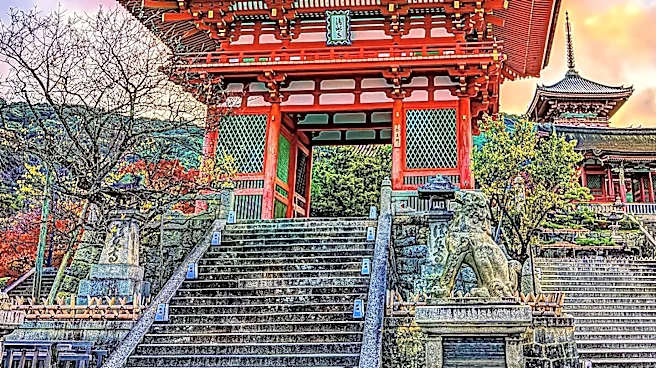
for its rich historical and spiritual landscape, boasting more than 2000 temples, shrines, and meticulously maintained gardens. Among its most iconic landmarks are the Kinkakuji Temple and the Fushimi Inari shrine, famous for its vibrant red torii gates. Visitors to Kyoto can immerse themselves in traditional Japanese culture, with opportunities to explore areas like the Gion District, where one might encounter Geisha and Maiko during evening strolls. The city offers a blend of ancient traditions and modern amenities, providing diverse accommodation options for travelers.
Why It's Important?
Kyoto's enduring status as a cultural and historical hub is significant for understanding Japan's heritage and its appeal to international visitors, including those from the U.S. The preservation of over 2000 temples, shrines, and gardens highlights a deep national commitment to cultural heritage, offering a unique window into traditional Japanese life and spirituality. For U.S. tourists, Kyoto provides an unparalleled opportunity for cultural immersion, contrasting with the modern urban experience of cities like Tokyo. The city's tourism sector, supported by its historical sites and cultural experiences, contributes significantly to the local and national economy. The blend of traditional and modern experiences, from ancient temples to contemporary accommodations, caters to a wide range of preferences, making it a key destination for those seeking authentic cultural engagement and historical exploration.
What's Next?
Kyoto is expected to continue its role as a premier destination for cultural tourism. Efforts will likely focus on sustainable tourism practices to manage the influx of visitors while preserving its historical sites and cultural integrity. The city will continue to offer a variety of experiences, from exploring ancient temples and gardens to experiencing traditional arts and cuisine. The ongoing development of diverse accommodation options, including traditional ryokans and modern hotels, will cater to the evolving needs of tourists. Furthermore, initiatives to enhance visitor experiences, such as guided tours through historical districts like Gion and improved accessibility to key landmarks, are anticipated to ensure Kyoto remains a top choice for those seeking a deep dive into Japanese culture.
Beyond the Headlines
Beyond its immediate appeal as a tourist destination, Kyoto represents a living testament to Japan's historical resilience and cultural continuity. The city's ability to maintain its ancient traditions and architectural marvels amidst modernization speaks to a profound cultural value placed on heritage. This balance between past and present offers a unique perspective on urban development and cultural preservation. The presence of Geisha and Maiko in the Gion District, for instance, is not merely a tourist attraction but a continuation of a centuries-old artistic and social tradition. Kyoto's emphasis on tranquility, reflected in its numerous gardens and temples, provides a counter-narrative to the fast-paced nature of contemporary life, offering visitors a space for reflection and appreciation of aesthetic beauty and spiritual depth. This cultural depth fosters a deeper understanding of Japanese identity and its contributions to global heritage.