







What's Happening?
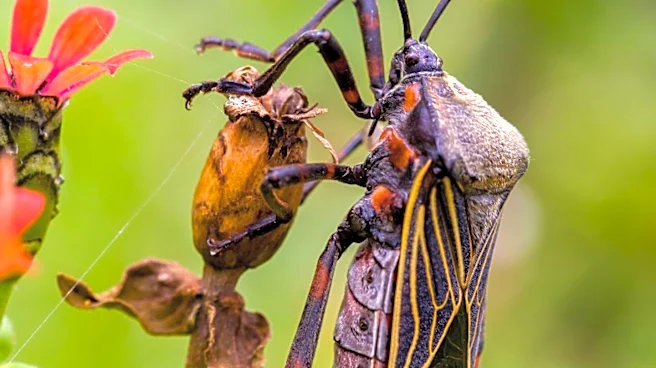
U.S. Customs and Border Protection (CBP) agriculture specialists at Detroit Metropolitan Airport (DTW) made a first-time discovery of giant scale insects (Aspidoproctus genus) in a traveler's luggage. The insects, though small at 5 millimeters, were found
feeding on fresh pine bark brought from Cameroon for medicinal purposes. This marks the first recorded instance of this genus at a U.S. port of entry. Earlier in the year, Detroit inspectors also identified a non-native straw crest moth, another first for a U.S. port of entry, found in luggage arriving from Ghana. These discoveries highlight the ongoing efforts by CBP and the U.S. Department of Agriculture (USDA) to prevent the introduction of foreign plant pests and animal diseases into the United States.
Why It's Important?
The interception of these previously unrecorded insect species at U.S. ports of entry is crucial for national agricultural security. Giant scale insects, despite their small size, can grow significantly and are known to feed on sap from plants, shrubs, and trees. A single female can lay over 5,000 eggs, and their young can be dispersed by wind, posing a substantial threat to U.S. ecosystems and agricultural industries. An uncontrolled infestation could lead to widespread damage to crops, forests, and ornamental plants, resulting in significant economic losses for farmers and the timber industry. The introduction of non-native species can also disrupt native biodiversity and ecological balance. These incidents underscore the critical role of CBP and USDA in safeguarding the nation's agricultural resources and the importance of travelers declaring all agricultural products.
What's Next?
CBP and USDA will continue to monitor and enhance their inspection protocols at ports of entry to prevent the introduction of invasive species. The seized pine bark and insects will undergo further testing and analysis to understand their potential impact and to develop strategies for future prevention. Travelers will likely face continued reminders and stricter enforcement regarding the declaration of agricultural products, including plants, seeds, fruits, vegetables, and animal products. Educational campaigns may be intensified to inform the public about the risks associated with undeclared items. The ongoing collaboration between CBP and USDA's Animal and Plant Health Inspection Service (APHIS) will remain vital in protecting U.S. agriculture from foreign pests and diseases.
Beyond the Headlines
These seemingly isolated incidents of insect interception point to a broader, continuous challenge in an increasingly globalized world: the constant threat of invasive species. The ease of international travel and trade creates numerous pathways for non-native organisms to enter new environments. Beyond direct agricultural damage, invasive species can lead to complex ecological cascades, altering habitats, outcompeting native species, and even impacting human health. The vigilance of agencies like CBP and USDA is a critical line of defense, but the ultimate responsibility also lies with individual travelers to adhere to agricultural import regulations. These events serve as a stark reminder of the interconnectedness of global ecosystems and the potential for seemingly small threats to have far-reaching environmental and economic consequences.