
What's Happening?
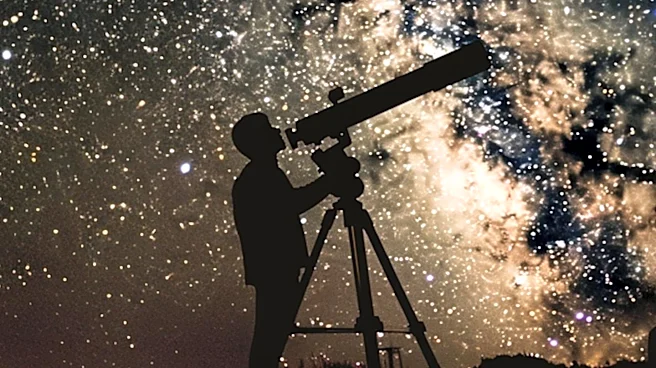
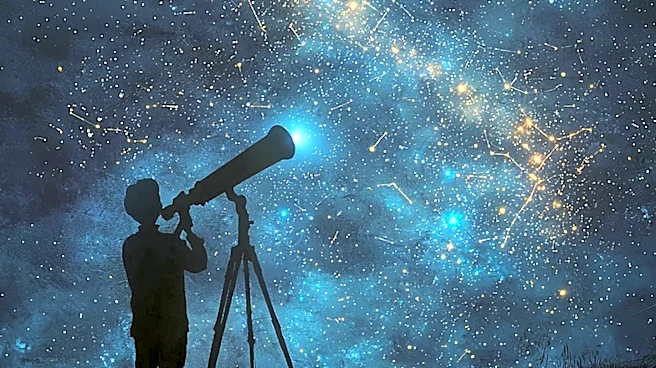
On the morning of July 5, several of Saturn's moons, including its largest and brightest, Titan, will be visible in the early morning sky. Astronomy enthusiasts can observe these celestial bodies with
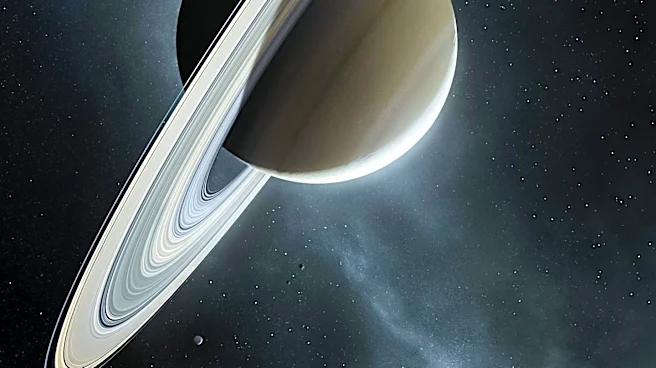
a telescope between 3 A.M. and sunrise. Saturn will be positioned more than 20° above the horizon, appearing in the east around 3 A.M. and moving to the southeast after 4 A.M. Titan, glowing at mid-8th-magnitude, will be located just northwest of Saturn. Other moons such as Tethys, Rhea, and Dione, which shine at 10th magnitude, will also be visible. Dione will be east of Saturn, Tethys northeast above the rings, and Rhea west of the planet. Iapetus, another of Saturn's moons, will be visible at 10th magnitude, located far to the planet's west.
Why It's Important?
This celestial event provides a unique opportunity for both amateur and professional astronomers to observe Saturn's moons, which are not always easily visible. Observing these moons can enhance understanding of Saturn's satellite system and its dynamics. Such events also promote public interest in astronomy and space science, encouraging educational activities and community engagement in scientific observation. The visibility of these moons can also aid in the study of their orbits and physical characteristics, contributing to broader astronomical research.
What's Next?
Astronomy enthusiasts and researchers may continue to monitor Saturn and its moons as they move through the sky, providing further opportunities for observation and study. Future celestial events, such as conjunctions or eclipses involving Saturn, may also be anticipated, offering additional chances for scientific exploration and public engagement. Observatories and astronomy clubs might organize viewing events to capitalize on these opportunities, fostering a community of interest around space observation.