



What's Happening?
A fast-moving weather system is set to bring wintry conditions to the Midwest and Northeast, while the western United States experiences record-high temperatures. According to the National Weather Service, areas in the Midwest, including parts of Iowa,
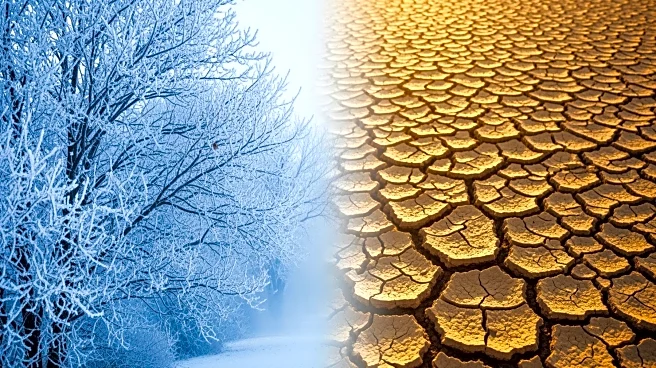
northern Missouri, and Illinois, are expected to see snow beginning late Sunday. This weather system is anticipated to move eastward, potentially causing travel delays in major cities such as Chicago, Indianapolis, and Pittsburgh by Monday morning, and later affecting Washington, D.C., and Baltimore. Meanwhile, Southwest Phillips County in Montana is under a winter storm warning, with heavy snow expected. Despite these cold conditions, approximately 90% of the contiguous United States is experiencing above-average temperatures, with record highs likely from Southern California to Texas.
Why It's Important?
The contrasting weather patterns across the United States highlight the challenges of managing infrastructure and public safety in the face of extreme weather conditions. The anticipated snow and icy conditions in the Midwest and Northeast could disrupt travel and daily activities, impacting commuters and potentially leading to power outages. In contrast, the record warmth in the West may exacerbate drought conditions and increase the risk of wildfires, posing significant challenges for local governments and emergency services. These weather extremes underscore the importance of preparedness and adaptive strategies to mitigate the impacts of climate variability on communities and economies.
What's Next?
As the weather system progresses, residents in affected areas are advised to stay informed about local weather advisories and prepare for potential disruptions. Authorities may issue further warnings or advisories as conditions develop. In the West, continued monitoring of temperature trends and drought conditions will be crucial to managing water resources and fire risks. The upcoming week is expected to bring strong storms and heavy rain to parts of the Plains and the Mississippi Valley, which could lead to flooding, necessitating further preparedness measures.