
What's Happening?
The White House has begun the formal procedures for a government shutdown as the Senate approved a spending package too late to prevent an appropriations lapse. The Office of Management and Budget (OMB)
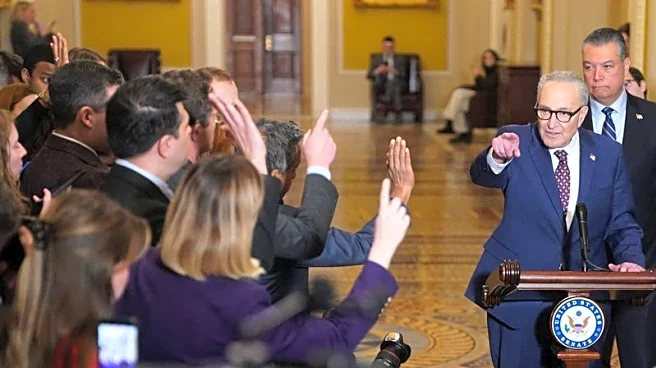
has been sending guidance to federal agencies about the likely lapse in funding, instructing them to prepare for a shutdown. The Senate passed a bill to fund most federal agencies through fiscal 2026, but the House is in recess and will not return until Monday, delaying the restoration of funding. The shutdown procedures involve notifying employees who will be required to work during the shutdown and those who will be furloughed. The delay in passing the funding bill was partly due to Senate Democrats' demands for reforms in the Department of Homeland Security's immigration enforcement tactics, following a fatal shooting by Border Patrol agents.
Why It's Important?
The potential government shutdown highlights ongoing tensions in U.S. politics, particularly regarding immigration enforcement and federal funding. The shutdown could disrupt operations in various federal departments, affecting services and employees. The delay in funding approval underscores the challenges in reaching bipartisan agreements on contentious issues like immigration. The situation also reflects the broader political dynamics, with Democrats pushing for reforms and Republicans opposing certain measures. The shutdown could have economic implications, as federal employees face uncertainty about their work status and pay, potentially affecting consumer spending and economic stability.
What's Next?
The House is expected to vote on the funding bill when it returns from recess, potentially ending the shutdown. However, negotiations over immigration enforcement reforms are likely to continue, as Democrats seek to attach these conditions to the funding bill. The outcome of these negotiations could influence future funding decisions and the broader political landscape. Federal agencies will need to manage the shutdown's impact on their operations and employees, while political leaders work to resolve the impasse. The situation may also prompt discussions about long-term solutions to prevent future shutdowns and improve the efficiency of the federal funding process.