










What's Happening?
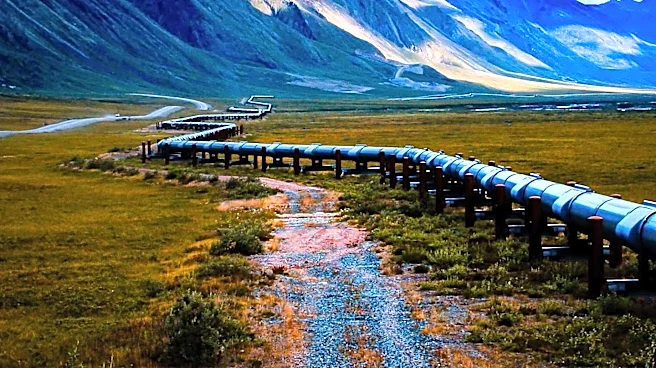
Three years after a significant oil spill in northern Kansas, a settlement has been reached involving the state of Kansas, the federal government, and South Bow, the company responsible for the Keystone pipeline. The spill, which occurred in December
2022, released over 543,000 gallons of oil, affecting prairie, cropland, and a creek. The U.S. Environmental Protection Agency (EPA) and the U.S. Department of Justice have accused South Bow of violating the Clean Water Act. As part of the settlement, South Bow will pay a civil penalty of nearly $27 million and undertake projects estimated to cost $40 million to prevent further environmental damage. Additionally, South Bow will contribute over $3 million towards natural resource restoration projects in Kansas.
Why It's Important?
This settlement underscores the critical need for stringent maintenance and oversight of oil pipelines, particularly those crossing environmentally sensitive areas. The spill had a devastating impact on the local ecosystem, killing or affecting over 2,700 animals and contaminating 35 acres of land. The financial penalties and mandated projects aim to mitigate the environmental damage and prevent future incidents. This case highlights the broader implications for pipeline operators across the U.S., emphasizing the importance of compliance with environmental regulations to protect natural resources and public health.
What's Next?
South Bow is expected to implement the agreed-upon projects to prevent further environmental damage, which will be closely monitored by the EPA and other regulatory bodies. The settlement may prompt other pipeline operators to reassess their maintenance and safety protocols to avoid similar legal and financial repercussions. Environmental groups and local communities will likely continue to advocate for stricter regulations and oversight to ensure the protection of natural resources.
Beyond the Headlines
The incident raises questions about the long-term sustainability of fossil fuel infrastructure and the potential risks associated with aging pipelines. It also highlights the need for investment in alternative energy sources to reduce reliance on oil pipelines. The settlement may influence future policy discussions on energy infrastructure and environmental protection, potentially leading to more robust regulatory frameworks.