





What's Happening?
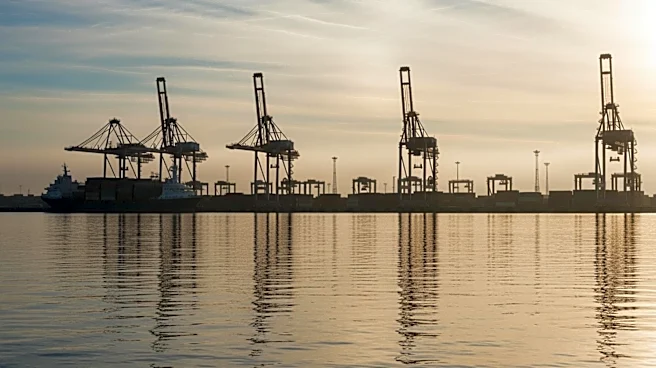
The Port of Bujumbura in Burundi is struggling to recover from severe flooding caused by intense rainfall, which has significantly raised Lake Tanganyika's water levels. The flooding has resulted in extensive damage to homes, roads, and infrastructure,
affecting over 240,000 people and displacing more than 48,000. The total estimated losses amount to $210 million. This disaster occurred shortly after a $93 million renovation project was announced to modernize the port, funded by the Africa Development Bank and the European Union. The port is crucial for Burundi's trade, handling over 80% of the country's imports and exports.
Why It's Important?
The flooding of the Port of Bujumbura highlights the vulnerability of critical infrastructure to climate change, especially in developing countries. As a landlocked nation, Burundi relies heavily on this port for economic stability and regional trade. The damage has disrupted supply chains and could lead to increased prices and economic instability. The situation underscores the need for resilient infrastructure that can withstand climate-related challenges. The international community's involvement in rebuilding efforts is vital for ensuring the port's future functionality and supporting Burundi's economic recovery.
What's Next?
Rebuilding efforts will focus on enhancing the port's resilience to future climate events. A detailed engineering study by the UNDP and the EU suggests reinforcing existing infrastructure and redesigning drainage systems to manage water flows better. The port is being reimagined as a resilient system capable of absorbing shocks and continuing operations under adverse conditions. Strengthening the port's resilience is crucial for Burundi's national stability and regional connectivity, as disruptions can have widespread economic impacts.