
What's Happening?
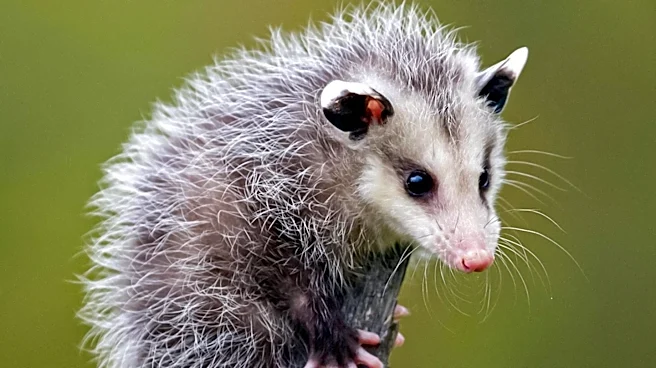
Meatball, an opossum that gained local attention after being discovered in Juneau earlier this year, has died at the Alaska Zoo. The news was announced via a Facebook post from the zoo. Meatball, also
briefly known as Chester, was found in the Mendenhall Valley in March and subsequently transported to the Alaska Zoo in Anchorage. Opossums are the only marsupial native to North America but are not indigenous to Alaska and are considered an invasive species in the state. Zoo staff estimated Meatball was between one and two years old, which is within the typical two-year lifespan for opossums in the wild. According to the zoo's post, Meatball succumbed to metabolic bone disease and other health issues last week. He was a beloved resident, known for enjoying canned bugs, using a cat wheel, climbing, and observing gardeners.
Why It's Important?
Meatball's story highlights the ongoing issue of invasive species in Alaska and the role of wildlife facilities in managing such situations. As opossums are not native to the state, their presence can disrupt local ecosystems by competing with native wildlife for resources or introducing diseases. The Alaska Zoo played a crucial role in providing a safe environment for Meatball while also utilizing his presence for educational purposes. He served as an ambassador, helping to inform visitors about opossums and the threats invasive species pose. His brief life at the zoo, following his unusual appearance in Juneau, underscored the importance of public awareness regarding non-native animals and the potential ecological impacts when they are introduced to new environments, whether intentionally or accidentally.
What's Next?
While Meatball's passing marks the end of his individual story, the broader issue of invasive species in Alaska remains pertinent. Wildlife authorities and conservation groups will continue to monitor for non-native species and educate the public on the importance of preventing their introduction and spread. The Alaska Zoo will likely continue its educational programs, using stories like Meatball's to raise awareness about wildlife conservation and the challenges posed by invasive species. The incident serves as a reminder for residents to be vigilant and report sightings of unusual animals, helping to protect Alaska's unique natural environment from ecological disruption.
Beyond the Headlines
Meatball's journey from a misdirected marsupial in Juneau to an educational ambassador at the Alaska Zoo offers a poignant narrative about human-wildlife interaction and conservation. His story, much like that of Grubby, another opossum found in Homer, illustrates how individual animals can become symbols for larger ecological issues. The fact that he succumbed to metabolic bone disease, a condition often linked to improper diet or environment, subtly underscores the challenges of caring for non-native species in captivity and the complexities of their biological needs. Beyond the immediate concern of invasive species, Meatball's life at the zoo fostered a connection between the public and wildlife, reminding us of the intrinsic value of every creature and the role zoos play in both rescue and education, even for animals that are not native to the region.