







What's Happening?
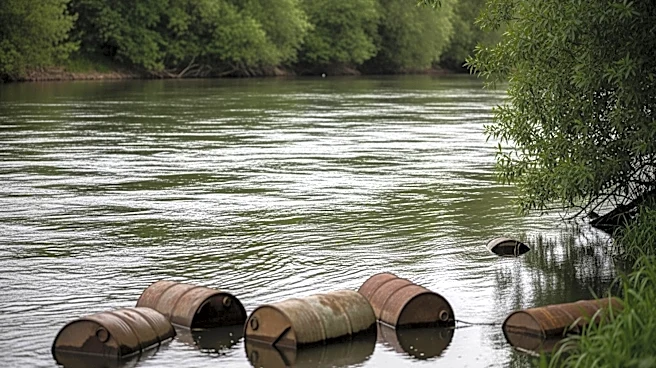
Four years after a significant train derailment in Harmar Township, Allegheny County, concerns persist regarding the contamination of the Allegheny River. The incident involved 17 Norfolk Southern trains, which spilled 3,000 gallons of non-flammable petroleum
distillate into the river. Despite the passage of time, a nonprofit organization emphasizes that substantial efforts are still required to ensure the safety of Pittsburgh's waterways. The derailment has left a lasting impact on the local environment, prompting ongoing scrutiny and calls for action to address the contamination and prevent future incidents.
Why It's Important?
The continued concern over the Allegheny River's contamination highlights the broader issue of environmental safety and the long-term impacts of industrial accidents. The spill has potential implications for public health, local ecosystems, and the economy, particularly in areas reliant on clean water sources. The situation underscores the need for stringent safety measures and effective response strategies to mitigate the risks associated with such incidents. Stakeholders, including local communities, environmental groups, and policymakers, are likely to be affected by the ongoing efforts to address the contamination and ensure the river's safety.
What's Next?
Efforts to remediate the contamination and prevent future incidents are expected to continue, with potential involvement from environmental agencies and local authorities. The nonprofit organization advocating for the river's safety may push for more comprehensive cleanup measures and stricter regulations on industrial activities near waterways. Public pressure and media attention could influence the pace and scope of these efforts, as stakeholders seek to balance economic interests with environmental protection.