




What's Happening?
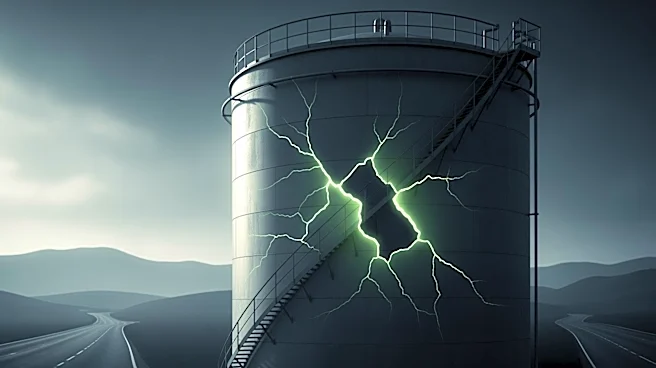
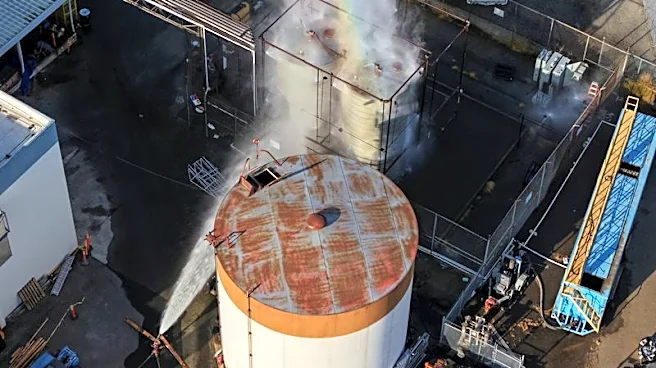
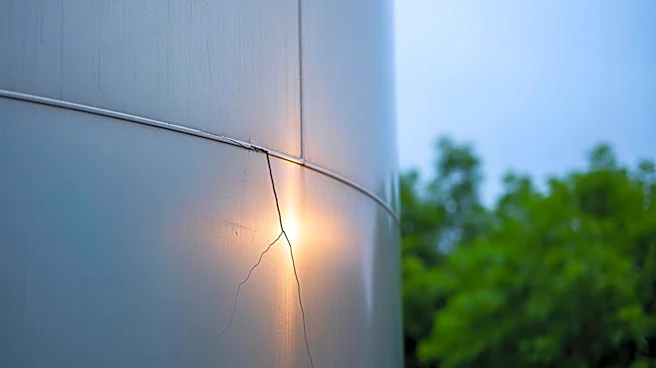
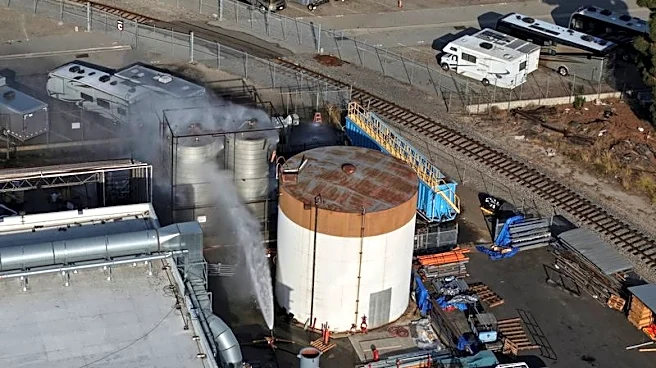
In Garden Grove, California, officials have reported a potential crack in a chemical tank that could alleviate the risk of a catastrophic explosion. The tank, which contains 7,000 gallons of methyl methacrylate, was at risk of exploding due to a buildup
of pressure from a chemical reaction. The discovery of the crack may allow for a controlled release of pressure, reducing the likelihood of an explosion. This development comes as more than 40,000 residents have been evacuated from the area, and shelters are reaching capacity. The situation remains tense, with authorities working to manage the chemical reaction and ensure public safety.
Why It's Important?
The discovery of a crack in the chemical tank is a critical development in preventing a potentially devastating explosion in a populated area. The incident highlights the importance of safety measures and emergency response protocols for facilities handling hazardous materials. The evacuation of thousands of residents underscores the potential human and environmental impact of such incidents. This situation may prompt a reevaluation of safety regulations and emergency preparedness plans, as well as increased scrutiny of facilities storing hazardous chemicals. The economic and social implications are significant, with potential disruptions to local businesses and communities.
What's Next?
Authorities are continuing to monitor the situation and are working to manage the chemical reaction within the tank. The discovery of the crack may allow for a controlled release of pressure, but the situation remains fluid. Officials have not yet provided a timeline for when residents can safely return to their homes. The incident may lead to increased regulatory oversight and changes in safety protocols for facilities handling hazardous materials. Local and federal officials are likely to continue coordinating efforts to manage the crisis and ensure public safety.