
What's Happening?
The 84th session of the Marine Environment Protection Committee (MEPC 84) was opened by IMO Secretary-General Arsenio Dominguez, who emphasized the need for member states to make significant progress on the IMO Net-Zero
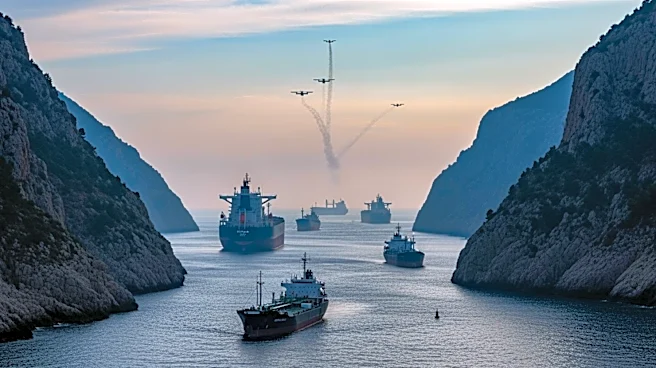
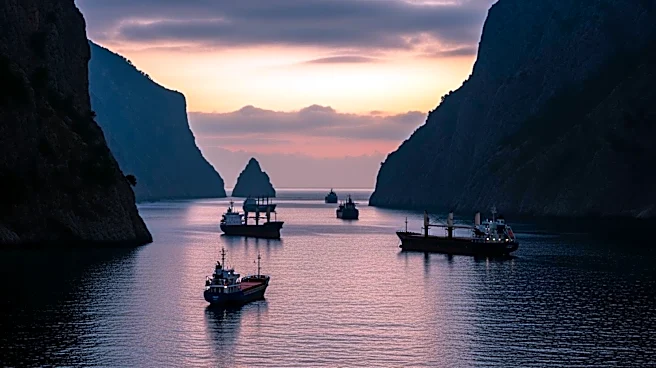
Framework aimed at reducing global shipping emissions. Dominguez highlighted the ongoing crisis in the Strait of Hormuz, where thousands of seafarers are stranded, facing significant risks and psychological strain. This situation poses broader implications for the global economy and food security. The Secretary-General called for effective multilateralism and urged all parties to work towards de-escalation. The session will also address greenhouse gas emissions, energy efficiency, ballast water management, biofouling, and marine plastic litter.
Why It's Important?
The discussions at MEPC 84 are crucial as they address the dual challenges of environmental sustainability and geopolitical tensions affecting global shipping. The Strait of Hormuz is a critical chokepoint for global oil and gas supplies, and prolonged instability could disrupt international trade and energy markets. The focus on reducing shipping emissions aligns with global efforts to combat climate change, with the potential to set new standards for the industry. Successful multilateral cooperation could serve as a model for addressing other international conflicts and environmental issues, highlighting the importance of diplomacy and consensus in global governance.
What's Next?
The MEPC 84 session will continue to explore technical and economic measures to achieve the IMO's Net-Zero Framework, including guidelines for greenhouse gas fuel intensity and life-cycle assessments. The committee will also review short-term measures like the Carbon Intensity Indicator regulations and consider emerging technologies such as onboard carbon capture and wind propulsion. The outcomes of these discussions could lead to new international regulations and standards for shipping, impacting global trade practices and environmental policies. Stakeholders, including governments and shipping companies, will need to adapt to these changes to ensure compliance and sustainability.