
What's Happening?
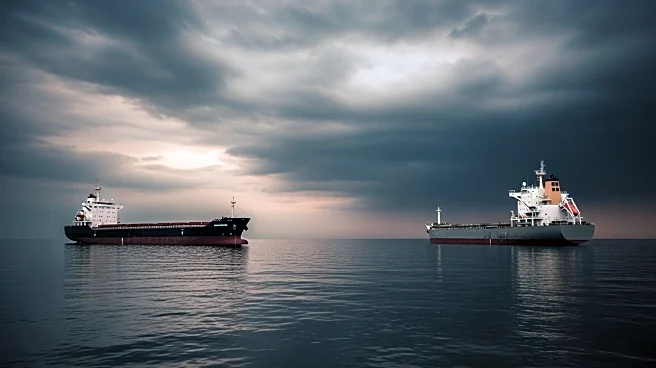
The United States is reportedly in the process of intercepting and seizing a vessel off the coast of Venezuela, according to three U.S. officials cited by Reuters. This action follows President Trump's
recent order for a large-scale military buildup in the Caribbean and South American waters, which includes deploying an aircraft carrier, fighter jets, and tens of thousands of troops. The administration has framed these actions as part of expanded counter-narcotics and sanctions enforcement. This reported seizure marks the second such action by the U.S. in recent weeks, following a blockade on Venezuela's oil tankers ordered by President Trump. The Venezuelan government has condemned these actions as acts of international piracy, accusing the U.S. of attempting to control its natural resources.
Why It's Important?
The seizure of vessels off the Venezuelan coast is significant as it underscores escalating tensions between the U.S. and Venezuela, particularly over oil resources. Venezuela, which holds the largest known oil reserves in the world, has seen its crude oil exports decline following the U.S. blockade. The U.S. actions are part of a broader strategy to pressure the Venezuelan government, led by President Nicolás Maduro, whom the U.S. has designated as a foreign terrorist organization. This move could have far-reaching implications for international relations and global oil markets, potentially affecting oil prices and supply chains. The situation also highlights the geopolitical struggle over control of natural resources and the use of military power in enforcing economic sanctions.
What's Next?
The situation is developing, and further actions by the U.S. could lead to increased diplomatic tensions or military confrontations. The international community may respond with calls for dialogue or condemnations of U.S. actions, depending on their geopolitical interests. The Venezuelan government is likely to seek support from allies and may take measures to protect its remaining oil assets. The U.S. may continue to enforce its blockade and could face legal challenges or international criticism. The outcome of these actions could influence future U.S. foreign policy and its approach to sanctions and military interventions.