
What's Happening?
The U.S. Department of Agriculture (USDA) has allocated $825 million across its Food for Progress, Food for Peace, and McGovern-Dole Food for Education programs. This significant funding aims to support
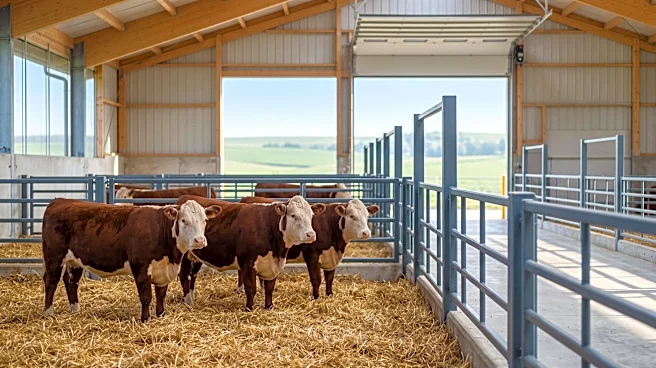
agricultural development and food security initiatives globally. As part of this allocation, Morocco has been selected as one of seven countries to receive a five-year award under the Food for Progress program, totaling up to $33.1 million. This grant is specifically designed to enhance food safety and strengthen Morocco's livestock sector. The project will be financed through the sale of 33,000 metric tons of U.S.-grown soybean meal and wheat, with international development organization Counterpart International tasked with its implementation. The initiative is projected to benefit approximately 5,000 individuals in Morocco. Other countries joining Morocco in receiving support from this broader U.S. agricultural assistance package include Bangladesh, Bolivia, Ecuador, the Philippines, Sri Lanka, and Thailand.
Why It's Important?
This USDA allocation is important for several reasons. Domestically, it supports U.S. agricultural producers by utilizing U.S.-grown commodities like soybean meal and wheat in international aid programs, thereby contributing to the stability of agricultural markets. Internationally, it addresses critical issues of food security and agricultural development in recipient countries. For Morocco, the $33.1 million grant is poised to significantly improve its food safety standards and bolster its livestock sector, which are vital components of its national economy and public health. Strengthening these areas can lead to increased local food production, reduced reliance on imports, and enhanced economic stability for farmers and related industries. The broader allocation underscores the U.S.'s commitment to global humanitarian efforts and its role in fostering agricultural resilience in developing nations, which can also serve U.S. foreign policy objectives by promoting stability and goodwill.
What's Next?
Following the USDA's allocation, the next steps involve the implementation of the various programs. For Morocco, Counterpart International will begin the five-year project to improve food safety and strengthen the livestock sector, utilizing the proceeds from the sale of U.S.-grown commodities. This will entail developing specific initiatives, training programs, and infrastructure improvements within the Moroccan agricultural landscape. The other six recipient countries will also see their respective programs commence, each tailored to their specific agricultural needs and challenges. Monitoring and evaluation will be crucial to assess the effectiveness of these programs in achieving their food security and agricultural development goals. Future allocations and program expansions will likely depend on the success and impact demonstrated by these current initiatives, as well as evolving global food security needs and U.S. foreign policy priorities.
Beyond the Headlines
Beyond the immediate impact of food security and agricultural development, this USDA allocation has deeper implications for international relations and sustainable development. By investing in the agricultural sectors of developing countries, the U.S. is not only providing humanitarian aid but also fostering long-term economic self-sufficiency. This approach can help mitigate potential future crises related to food shortages and instability, which often have broader geopolitical consequences. Furthermore, the use of U.S.-grown commodities in these programs highlights the interconnectedness of global food systems and the role of agricultural trade in international aid. It also raises questions about the balance between providing direct food aid and supporting local agricultural markets, and how these programs can be designed to avoid unintended negative impacts on local producers while still achieving their humanitarian objectives. The focus on climate resilience in agricultural research, as explored by Morocco and the U.S., also points to a growing recognition of the need for sustainable practices in global food production.