



What's Happening?
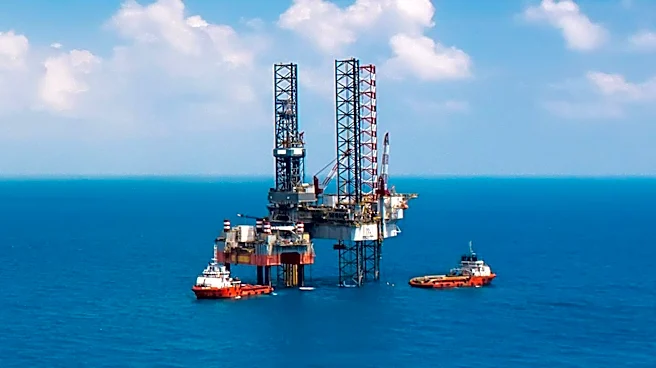
Suriname is on the verge of a significant economic transformation as its oil industry begins to pay off. The country, which shares geological similarities with Guyana, has seen promising developments in its offshore oil fields. Notably, the GranMorgu
project in Block 58, operated by TotalEnergies and APA Corporation, is expected to become a major oil-producing site by 2028. This project, with a capacity of 220,000 barrels per day, is anticipated to generate up to $26 billion in fiscal income for Suriname. The project is designed to have a low carbon impact, with advanced emission monitoring systems. Additionally, Petronas has made eight discoveries in Block 52, further indicating Suriname's potential as a major oil producer. These developments come amid global energy market disruptions due to geopolitical tensions, particularly the U.S. conflict with Iran affecting the Strait of Hormuz.
Why It's Important?
The emergence of Suriname as a significant oil producer could have substantial implications for the global energy market, especially as geopolitical tensions continue to affect oil supply routes. For Suriname, this development represents a potential economic windfall that could alleviate its ongoing economic crisis, marked by severe financial challenges and social unrest. The country's ability to capitalize on its oil reserves could transform its economic landscape, providing much-needed revenue and stability. For the U.S. and other global stakeholders, Suriname's oil production could offer an alternative source of energy, potentially stabilizing oil prices affected by Middle Eastern conflicts.
What's Next?
As Suriname's oil projects progress, the country is expected to solidify its position as a key player in the South American oil industry. The successful development of the GranMorgu project and further exploration in Block 52 could attract more international investment and partnerships. Suriname's government will likely focus on managing this new revenue stream to address its economic challenges. Meanwhile, global energy markets will closely monitor Suriname's output as a potential stabilizing factor amid ongoing geopolitical tensions.
Beyond the Headlines
Suriname's oil boom also raises questions about environmental impacts and the country's ability to manage its natural resources sustainably. The focus on low-carbon production methods in the GranMorgu project highlights a growing trend in the industry towards more environmentally conscious practices. However, the long-term environmental and social impacts of increased oil production will need careful management to ensure that economic benefits do not come at the expense of ecological and community well-being.