




What's Happening?
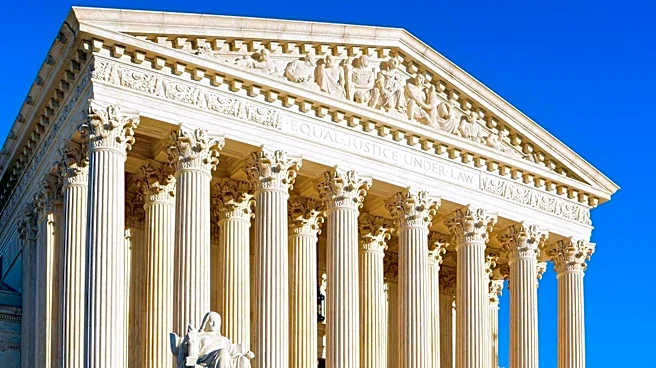
The U.S. Supreme Court has ruled in the case of Trump v. Slaughter, granting the president broad authority to dismiss commissioners of most federal regulatory agencies. This decision has sparked discussions about the potential implications for the civil
service and the administrative state. Legal experts, including Professor Christopher Walker, argue that while the ruling strengthens the unitary executive theory, it does not necessarily threaten the civil service. Walker emphasizes the importance of maintaining a balance between accountability and expertise in regulatory governance. The ruling is seen as part of a broader trend towards increasing presidential control over the executive branch, a development that has been supported by some conservative legal scholars.
Why It's Important?
The Supreme Court's decision is significant as it reinforces the unitary executive theory, which advocates for strong presidential control over the executive branch. This ruling could lead to increased political influence over federal agencies, potentially affecting their independence and decision-making processes. The decision may also impact the stability and predictability of the regulatory environment, which is crucial for businesses and economic stakeholders. By expanding presidential authority, the ruling could alter the balance of power between the executive and legislative branches, raising concerns about the potential for overreach and the erosion of checks and balances in the U.S. government.
What's Next?
Following the ruling, there may be increased scrutiny of the president's use of this expanded authority, particularly in the context of agency leadership changes. Legal challenges and debates are likely to continue as stakeholders assess the implications for the civil service and regulatory processes. The decision may also prompt legislative efforts to clarify or limit the scope of presidential power over federal agencies. As the political landscape evolves, the ruling could influence future appointments and policy decisions, shaping the administrative state and its role in governance.