
What's Happening?
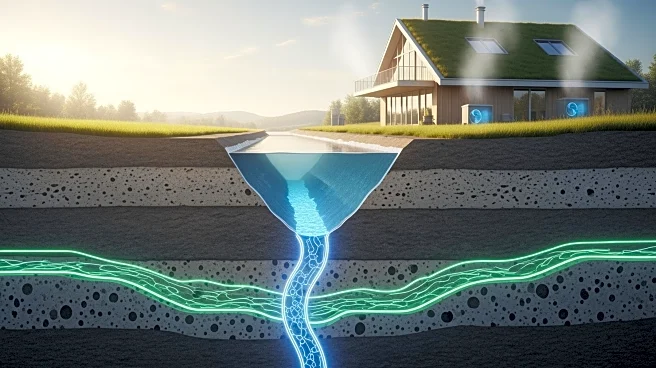
Minnesota is set to implement an Aquifer Thermal Energy System (ATES) in St. Paul, aiming to provide sustainable heating and cooling solutions. The system will utilize groundwater from an aquifer 300 to 500
feet below ground, supplying energy to high-efficiency electric heat pumps. This initiative, overseen by Ever-Green Energy, is part of a mixed-use development in St. Paul's Greater East Side. The project promises significant cost savings for residents, potentially reducing monthly energy bills from $200-$300 to under $100. The system is expected to serve 850 homes and several light industrial buildings, powered partly by solar panels.
Why It's Important?
The introduction of ATES in Minnesota represents a significant step towards reducing greenhouse gas emissions and promoting energy efficiency. By leveraging groundwater's stable temperature, the system offers a reliable and cost-effective alternative to traditional heating and cooling methods. This initiative aligns with global efforts to transition to sustainable energy solutions, potentially setting a model for other U.S. cities. The project also highlights the importance of policy support in adopting innovative energy technologies, as seen in the Netherlands, where ATES systems are widely used.
What's Next?
The success of the ATES project in St. Paul could lead to broader adoption across the U.S., especially in regions with suitable geological conditions. Policymakers may consider developing comprehensive frameworks to support the deployment of such systems, addressing legislative and regulatory barriers. The project's outcomes will likely influence future energy policies and investments, encouraging more communities to explore sustainable energy solutions. As the system becomes operational, its performance and cost savings will be closely monitored to assess its viability for wider implementation.