








What's Happening?
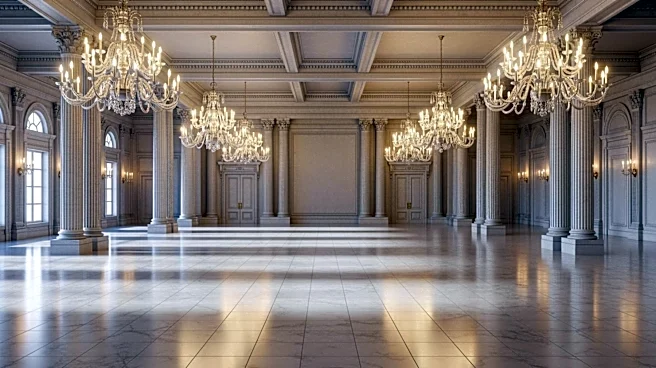
The National Capital Planning Commission (NCPC) has approved plans for a new ballroom at the White House, despite a federal judge's ruling that halted construction. The approval came after the White House revised the proposal to address criticisms from
architects and preservation advocates. The revisions included eliminating a staircase from the south portico and other design changes. The legal battle over the project continues, with the Trump administration defending its authority to proceed without congressional approval. The project has faced significant public opposition, with over 35,000 comments submitted, mostly against the plan. The NCPC's decision sets the stage for further legal and political disputes over presidential authority and oversight.
Why It's Important?
The approval of the White House ballroom project by the NCPC, despite a federal court's injunction, highlights ongoing tensions between executive authority and legal oversight. This development could have significant implications for how presidential projects are managed and approved, potentially setting a precedent for future alterations to historic sites. The controversy also underscores the importance of public and congressional input in decisions affecting national landmarks. The project's national security implications, due to planned underground facilities, add another layer of complexity to the debate. The outcome of this legal battle could influence future executive actions and the balance of power between branches of government.
What's Next?
The legal and political battle over the White House ballroom project is expected to continue, with appeals and additional challenges likely. The Trump administration has a 14-day window to appeal the federal court's decision. Meanwhile, Congress has yet to authorize the project, and lawmakers from both parties have expressed concerns about executive authority. The project's future will depend on how courts interpret presidential powers and whether Congress intervenes. The ongoing dispute may prompt legislative action to clarify the approval process for changes to historic sites, potentially impacting future presidential projects.